LLM Proxy vs. LLM Gateway Architectural Differences
Proxies move traffic; gateways enforce policy—and mixing them up costs teams real money.
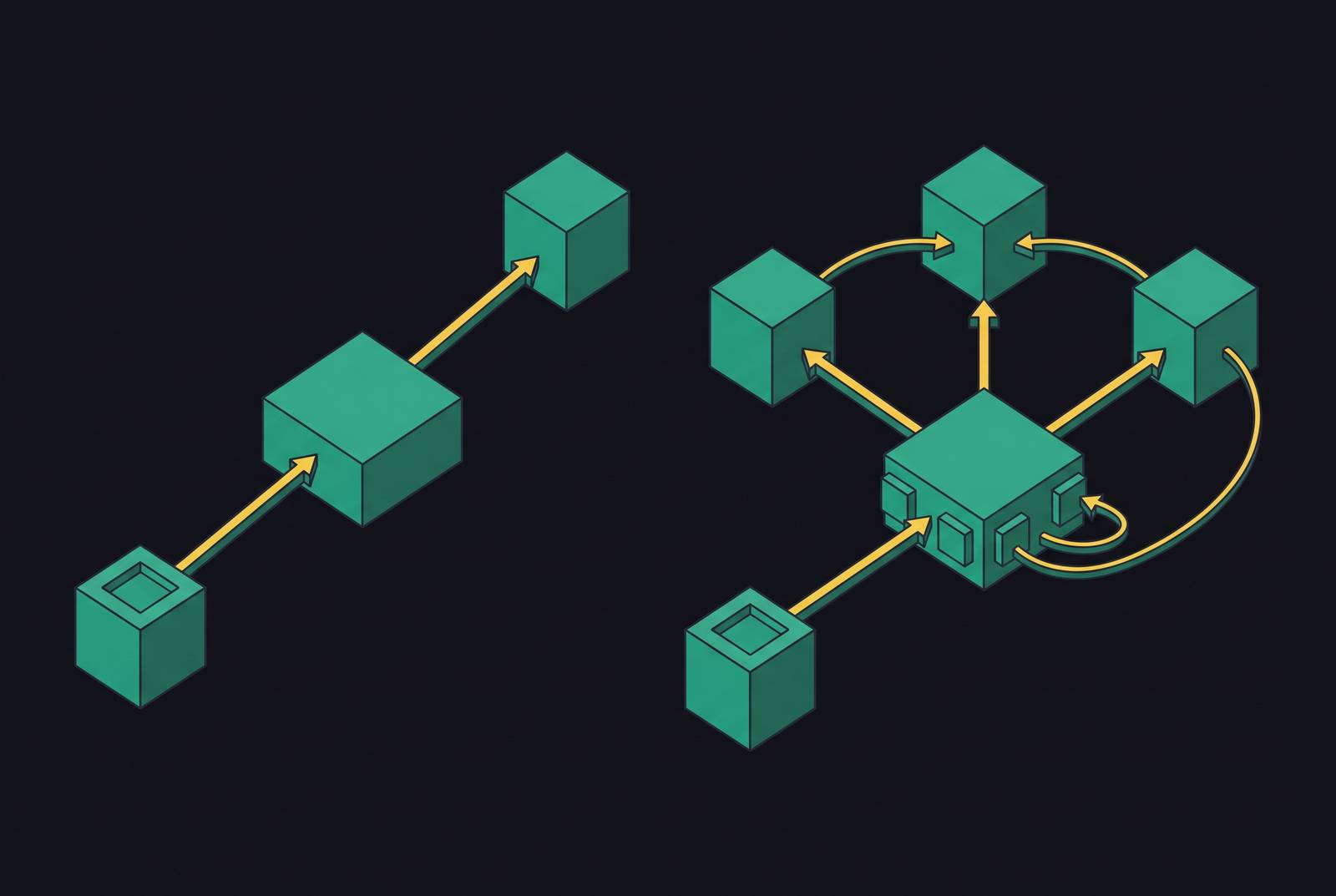
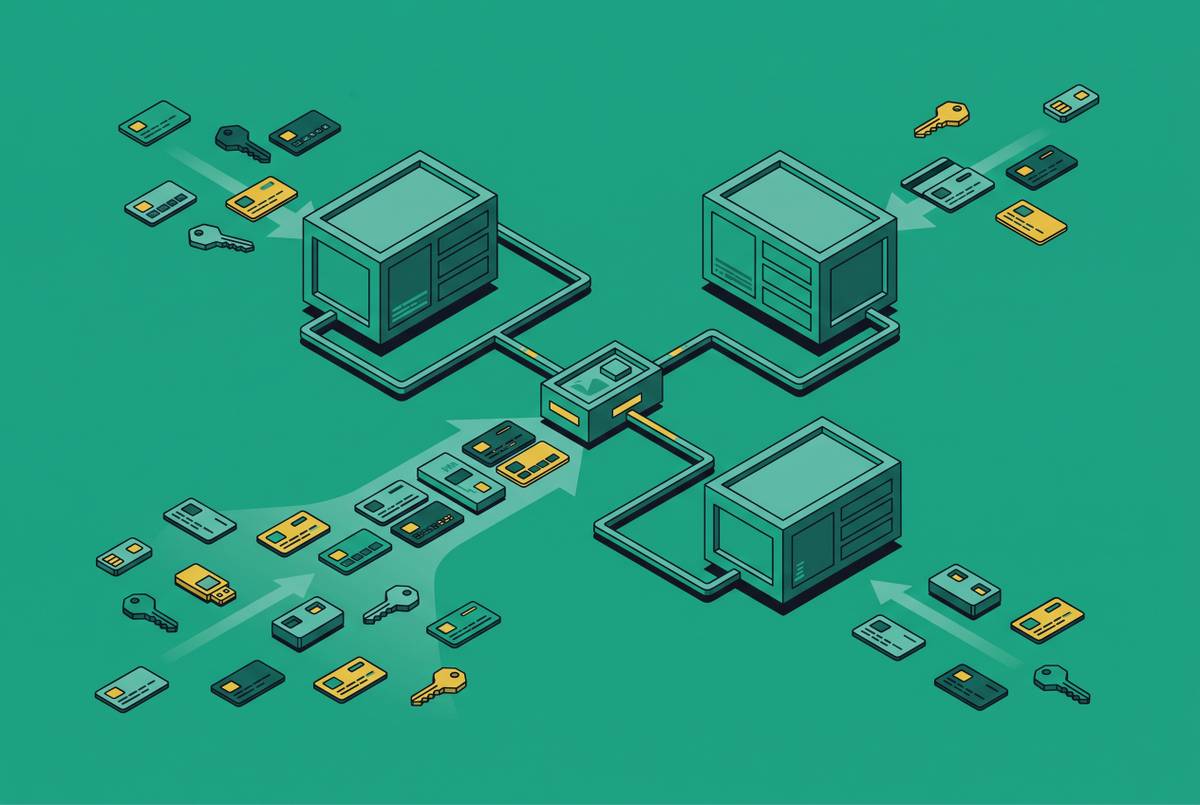
LLM proxy and LLM gateway get used like synonyms in vendor docs and job postings, but they name different layers of an AI stack, doing different jobs for different reasons. A proxy moves traffic. A gateway decides who gets to send that traffic and under what rules. Mixing them up has a real cost: install a proxy expecting it to enforce budgets and it won't, deploy a full gateway when a simple pipe would do and the extra weight slows a team down for nothing.
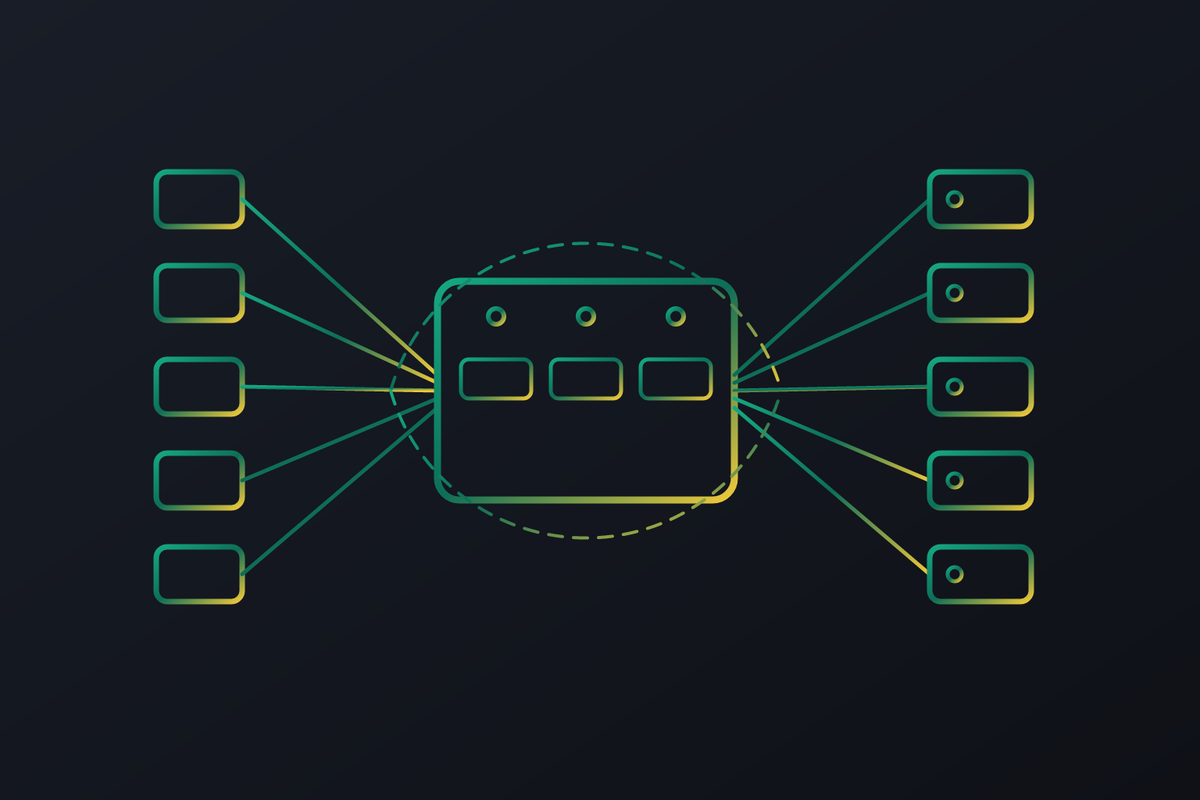
There are really three layers worth naming on their own. A proxy handles transport: it forwards, shapes, and maybe caches. A router handles decisions: given a request, which model or provider should take it? A gateway handles policy: who's allowed to send this, and what happens if they break a rule. Worth adding a fourth, related but separate: async observability tools like Langfuse sit outside the request path entirely. There's no latency cost, but there's also no real-time enforcement. It's a deliberate design choice with its own tradeoffs.
Vendor naming muddies this further. LiteLLM markets itself as both a proxy and a gateway. Some gateway products call themselves proxies in their own docs. None of that self-labeling matters much once the taxonomy is clear; what follows walks through each layer, then gets into when a team needs one of these, several, or all three at once.
What an LLM proxy actually does — and where it stops
A proxy's job is narrow on purpose: sit between an app and a model provider, forward the request, hand back the response. Neither side should notice it's there.
Most proxies add a few things on top of that without becoming anything more:
- Response caching, so a repeated prompt returns a stored answer instead of hitting the model again
- Token counts and per-request cost logs
- Basic retry logic when a call fails for something transient, like a timeout
- One API surface, so the app talks to a single endpoint instead of juggling separate SDKs for separate providers
What a proxy won't do matters just as much. It doesn't cap spend per team or project. It doesn't strip personal data out of a prompt before it leaves the network. It doesn't check who's calling, only that a request came through. And it doesn't pick a model based on cost or latency or capability; that's a different layer's job entirely.
Think of a proxy as plumbing. It moves traffic with almost no overhead, and the narrowness is what makes it useful. For a single team running a single model with steady, predictable volume, a proxy is enough. Anything more would just be complexity nobody asked for.
The friction shows up later. Two teams start sharing an API key, and neither one can see what the other is spending. At that point, a proxy's logs tell someone what happened after the fact, but nobody can stop it while it's happening. That's the moment a proxy stops being sufficient.
What an LLM gateway adds — the policy and control plane that a proxy lacks
A gateway is a different layer doing a different job: governing access across an entire organization, not just routing one app's calls.
A few things a real, production gateway does that a proxy structurally can't:
- Unified API translation. Apps send requests in one format, usually OpenAI-compatible, and the gateway rewrites them into whatever shape each provider expects. Swapping a frontier model out for another becomes a config change instead of a rewrite.
- Authentication and role-based access. Who can call which models, under what conditions, up to what quota.
- Real-time budget enforcement. When a team or project or key hits its cap, the gateway blocks or reroutes the call right then, not after someone reviews a report the next morning.
- Routing with policy attached. A gateway can make the same cost- or latency-based routing calls a standalone router makes, but it wraps those calls in enforcement, like refusing to route sensitive data to a provider that isn't approved for it.
- PII and sensitive data redaction. Regulated data gets caught and stripped before it ever reaches an outside model.
- One audit trail. Every call from every app and every team runs through the same governed layer, so the log is complete and can't be quietly edited after the fact.
- Fallback and failover. If a provider degrades, traffic reroutes automatically, with no code change needed on the application side.
Argonne National Laboratory is a good concrete case here. Its ARGO-PROXY gateway replaced code that had been hand-written to map one API format to another, and doing that removed roughly 2,000 lines of custom translation logic while adding support for more API standards and two-way streaming. That's what centralizing the mediation actually buys back: code that no longer has to exist.
The shift in framing matters more than any single feature on the list. A proxy serves one developer's app. A gateway serves the organization. One's a tool; the other is infrastructure.
How the router fits between proxy and gateway
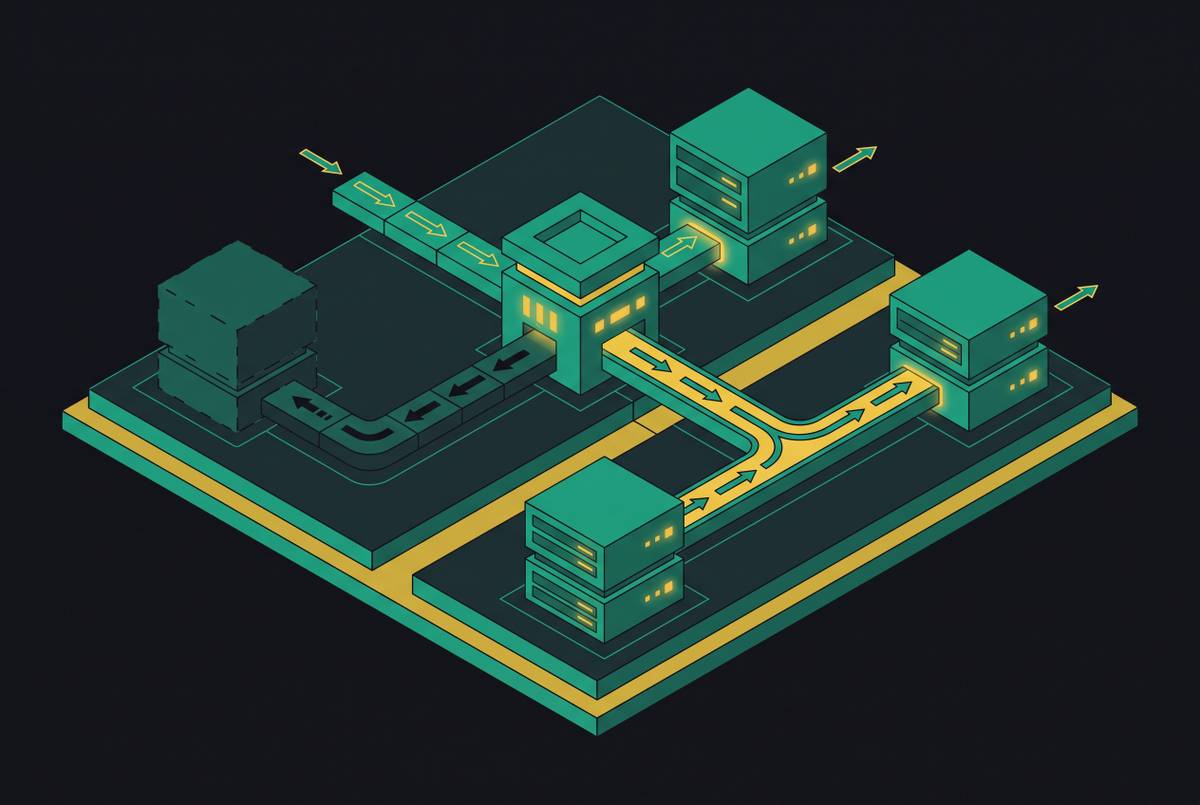
A router answers a question neither a proxy nor a gateway is built to focus on by itself: for this specific request, which model or provider should actually handle it?
Routing approaches sit on a ladder, and each step up adds more judgment:
- Static rules. Summarization always goes to model A, code always goes to model B. Simple, dumb, easy to reason about.
- Classifier-based routing. A small model, something like a BERT-based classifier, predicts which provider will hit acceptable quality at the lowest cost. On MMLU, this style of routing has cut costs by 45% at comparable quality, according to engineering analysis of routing approaches.
- Cascade routing. Cheap models take the first pass on most queries; the expensive model only sees what the cheap one couldn't handle. RouteLLM, out of UC Berkeley and presented at ICLR 2025, cut cost by more than 85% on MT Bench while holding onto 95% of GPT-4's performance, sending only 14% of queries up to the strong model.
- Semantic routing. Route based on what the query actually means and what domain it's in, not just surface-level patterns.
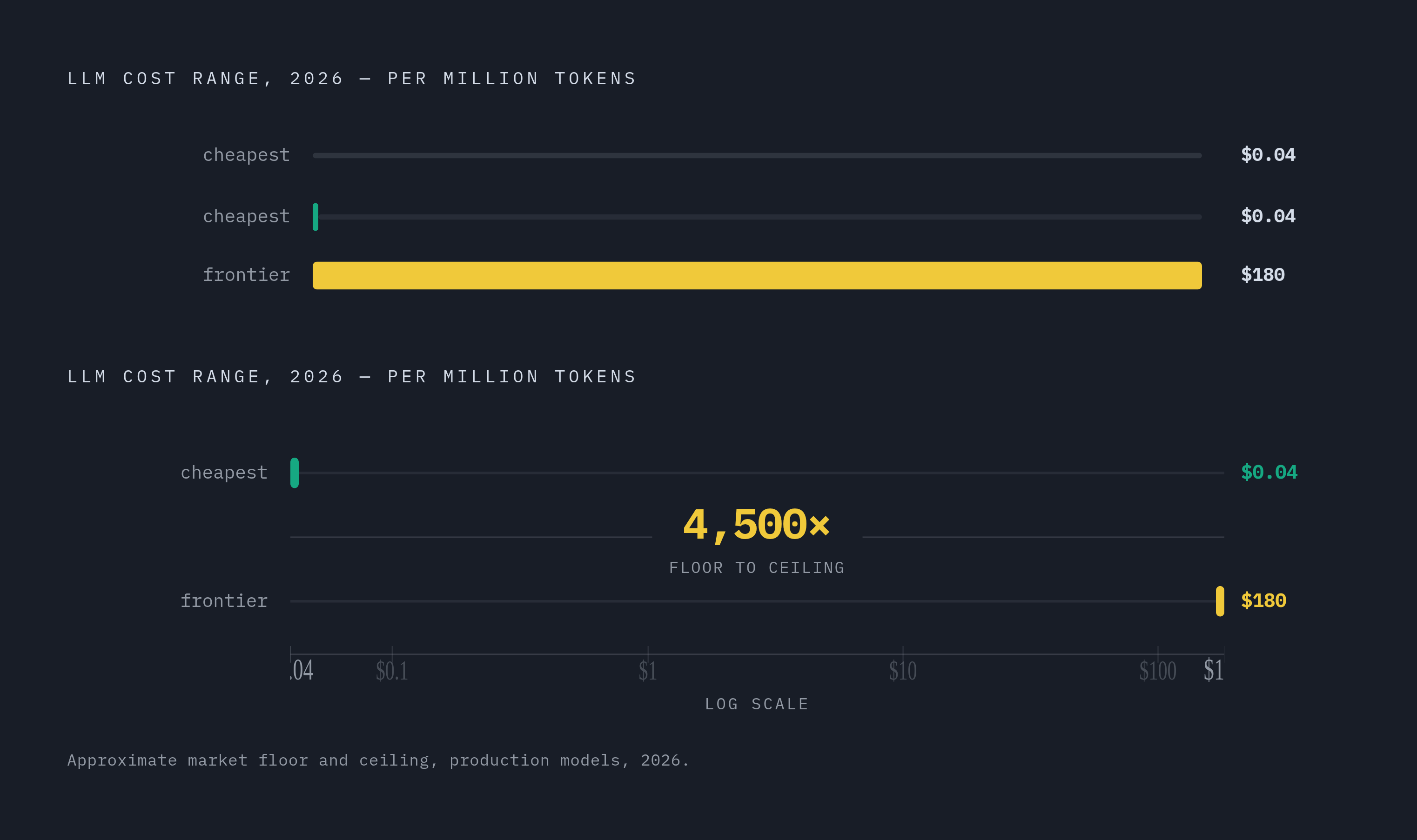
The pricing spread across models in 2026 is the real argument for taking any of this seriously: the cheapest production models run around $0.04 per million tokens, while the priciest frontier reasoning models run upward of $180 per million tokens. That's a gap of roughly 4,500 times between the floor and the ceiling, which turns routing from a nice-to-have into a line item that shows up on a budget.
Routing and failover get confused constantly, and they shouldn't be. Routing optimizes for cost, quality, and latency. Failover exists purely for reliability, kicking in when something breaks. A gateway usually handles both, but through separate policy paths, not the same one.
Routing isn't only about spending less, either. A router built well enough to send each query to the model that's actually strongest in that area can beat any single model used across the board, which is the central finding of a 2026 arXiv survey on dynamic routing. And a router doesn't have to live inside a gateway. It can run as its own service sitting between the app and a plain proxy; which setup makes sense depends entirely on what else the team needs the gateway layer to do.
A decision framework for which layer a team actually needs
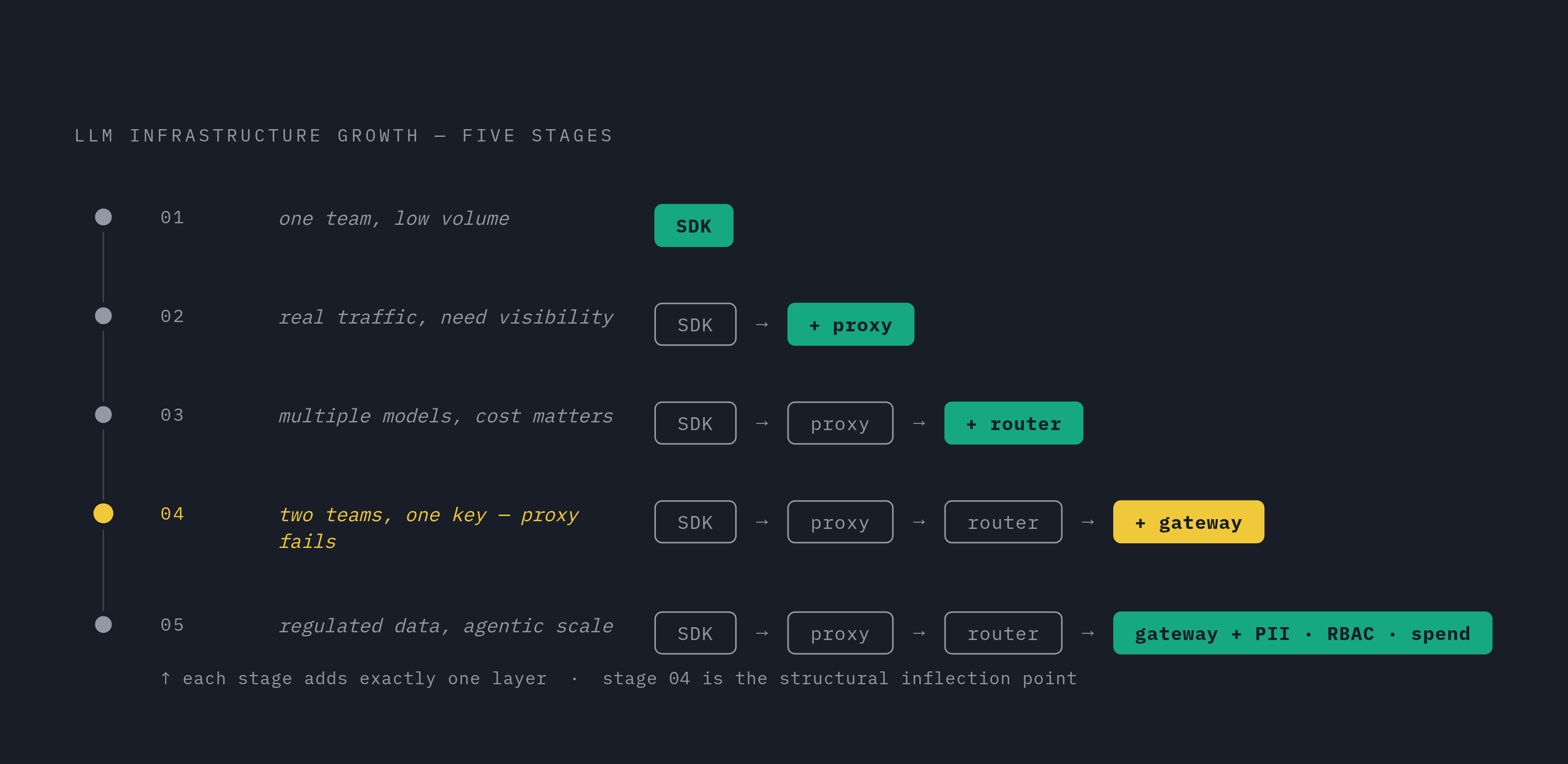
None of this is a one-time decision. Teams tend to add layers as scale and complexity grow, not all in one go.
A rough path, stage by stage:
- One team, one model, low volume. Direct SDK calls are fine here. A proxy adds only marginal value, and a gateway adds overhead nobody needs yet.
- Real traffic, and someone wants visibility. Add a proxy. Change one endpoint, get per-request logs and rough cost attribution, no changes to app logic required.
- Multiple models, cost starting to matter. Add a router. Per-request cost tracking plus the ability to send easy tasks to cheaper models; teams that turn on model routing commonly see a meaningful drop in spend within the first week.
- Multiple teams sharing infrastructure, budgets need real enforcement. That's a gateway. The instant two teams share a key and neither can see the other's spend, a logging proxy stops being enough.
- Regulated data in prompts, audit demands, or agentic workloads at scale. A gateway with PII redaction, role-based access, and real-time spend controls becomes the risk control layer here.
Agentic workloads change the math faster than most teams expect. In 2026, agentic AI setups burn through 5 to 30 times more tokens per task than a standard chatbot interaction, since an agent that plans, researches, and executes ends up making dozens of chained calls in a row. That compresses a token budget faster than any dashboard's refresh rate can keep up with, and it's often the exact thing that pushes a team from "a proxy covers us" to "enforcement has to happen at the gateway."
Build versus buy is worth being honest about too. A self-hosted proxy is relatively lightweight to stand up. A gateway with role-based access, full audit logging, and PII redaction that stays correct as provider APIs change underneath it is a standing engineering commitment. That operational cost deserves to be spelled out, not assumed away. Managed gateway products, the kind that expose one unified API across many providers without asking a team to host anything, exist for exactly this reason: the gateway layer is infrastructure most engineering teams would rather not own outright. Concentrate, for instance, routes requests across more than 130 providers through a single API endpoint without any proxy to host or maintain.
Where governance pressure is forcing the gateway layer into production AI stacks
Enterprise spend on LLM APIs rose sharply between late 2024 and mid-2025, going from $3.5 billion to $8.4 billion, and 78% of AI teams say their API costs blew past what they'd projected in the first year of running these systems in production. This isn't a hypothetical risk anymore; it's already showing up on budget lines.
Uber's case makes the stakes concrete. In December 2025, the company rolled out an AI coding tool to 5,000 engineers. By April 2026, it had burned through its entire annual AI budget in four months. No gateway-layer enforcement was in place, so there was no mechanism to catch the overrun while it was happening, only after.
Regulation adds a second push in the same direction. Every prompt with PII or PHI sent without appropriate data protections in place is a potential disclosure a compliance team has to answer for later.
Security frameworks have flagged sensitive information disclosure as a top concern for LLM deployments, reflecting a real shift: LLMs need broader access to internal data to be useful, and that access widens the surface for something to leak. Compliance teams are starting to treat what goes into a prompt the same way they'd treat any other regulated data flow.
The adoption curve backs this up. Industry projections reported by TrueFoundry estimate that by 2028, 70% of software teams building applications across multiple models will run an AI gateway, up from roughly a quarter in 2025. The gateway layer is moving from something only the most careful teams bothered with to something closer to standard practice.
Which lands on the real point of all this: a proxy fits when the scope stays small, a router is its own distinct layer built for optimizing cost and quality, and a gateway earns its place once the questions stop being about whether the system works and start being about who sent the request, what it cost, and whether the data in it was ever safe.