OpenAI Rate Limit Tiers and Gateway-Layer Management
A gateway layer queues and routes requests to sidestep OpenAI's tier-based rate limits.

OpenAI's rate limits scale with spend and account age, not with how badly a team needs capacity right now. That mismatch is what breaks products, usually right when traffic finally picks up. A gateway layer sitting between application code and the model API fixes this through queuing, fallback, and spend-aware routing, and it does the job better than the patches most teams reach for first, which treat a structural problem like a one-off bug. The fix is architectural — worth naming plainly before anything else here makes sense.
Three limit types apply at once: RPM (requests per minute), TPM (tokens per minute), and TPD (tokens per day). A team can sit well under its request cap and still get throttled on tokens, especially with long prompts or wordy completions. Five tiers govern all this, and moving up isn't a form a team fills out. It's gated by cumulative spend and account age, tracked automatically, with no human reviewing the request.
The numbers make the gap concrete. Tier 1 kicks in after a $5 payment: GPT-4o gets 500 RPM and 200,000 TPM, GPT-4o-mini gets 500 RPM and 2,000,000 TPM, and the whole account caps out at $100 a month. Tier 2 needs $50 spent and at least 7 days of account age, and it jumps GPT-4o to 5,000 RPM and 450,000 TPM, with a $500 monthly cap. Tier 5, reachable after $1,000 spent and 30-plus days, pushes GPT-4o to 10,000 RPM and 30,000,000 TPM, with a $50,000 monthly cap. OpenAI does allow manual increase requests, but those sit at the back of the line unless a team is already burning through most of its current quota. Limits also apply per model and per endpoint, so a team can be maxed out on GPT-4o while GPT-4o-mini sits idle right next to it, untouched.
Here's the part that trips people up: an RPM limit isn't a clean per-minute average. OpenAI enforces it in shorter windows underneath that number, so a burst of concurrent calls can trigger a 429 even when the traffic looks fine averaged over an hour. Spend caps run on a separate axis entirely, too, and a team can get throttled by its monthly budget cap well before it ever touches an RPM or TPM ceiling. Most people don't figure that out until they've burned a week debugging the wrong problem.
Where teams predictably run into the tier ceiling as they scale
Early-stage teams usually live inside Tier 1 without noticing it, right up until a feature launch or a batch job changes the traffic pattern overnight. Then the math turns against them fast.
The jump from Tier 1 to Tier 2 looks generous on paper: 500 RPM to 5,000 RPM, a tenfold increase. But that 7-day account age minimum means a team growing fast can't just pay its way past the wait. Money alone doesn't move the tier, and no amount of budget changes that clock.
Multi-tenant products make this worse. One API key shared across a whole user base means a single heavy user can chew through quota that everybody else depends on. Nobody gets a fair share when the pool is shared and nobody's watching who's drawing from it.
Batch processing and agentic workflows expose a different weak spot. When one user action fires off several sequential model calls, teams hit TPM ceilings well before RPM becomes the problem, because they've been staring at the request count instead of the token count.
There's a quieter failure mode too, and it's the one that wastes the most engineering time: the Tier 1 spend cap of $100 a month can be the actual bottleneck. Teams spend weeks optimizing latency and throughput, convinced they're fighting a rate limit, when the account has simply hit its billing ceiling. And because OpenAI enforces rate windows in short bursts rather than smooth averages, consumer apps with spiky usage patterns get penalized harder than steady, even traffic running the same average load.
Faced with all this, teams usually reach for three fixes, and none of them touch the real problem. Exponential backoff in application code handles the immediate 429 but does nothing to redistribute load or take pressure off upstream. Requesting a manual limit increase is slow and uncertain, and even when it works, it only raises the one ceiling directly in front of the team, not the architecture that produced the pressure in the first place. Adding a second OpenAI project key spreads the load a little, but it fragments billing and visibility across two dashboards, with no real strategy behind the split. Call these patches: they leave the tier structure itself untouched.
What a gateway layer actually does at the infrastructure level
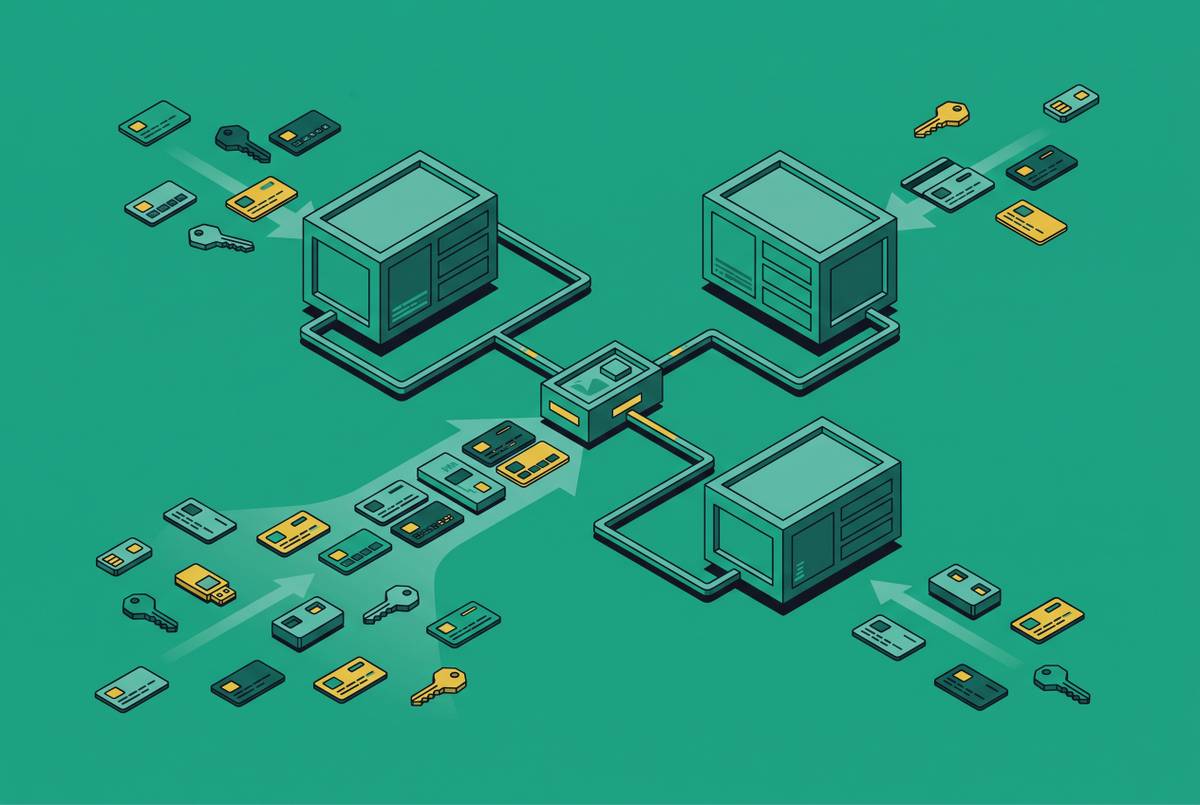
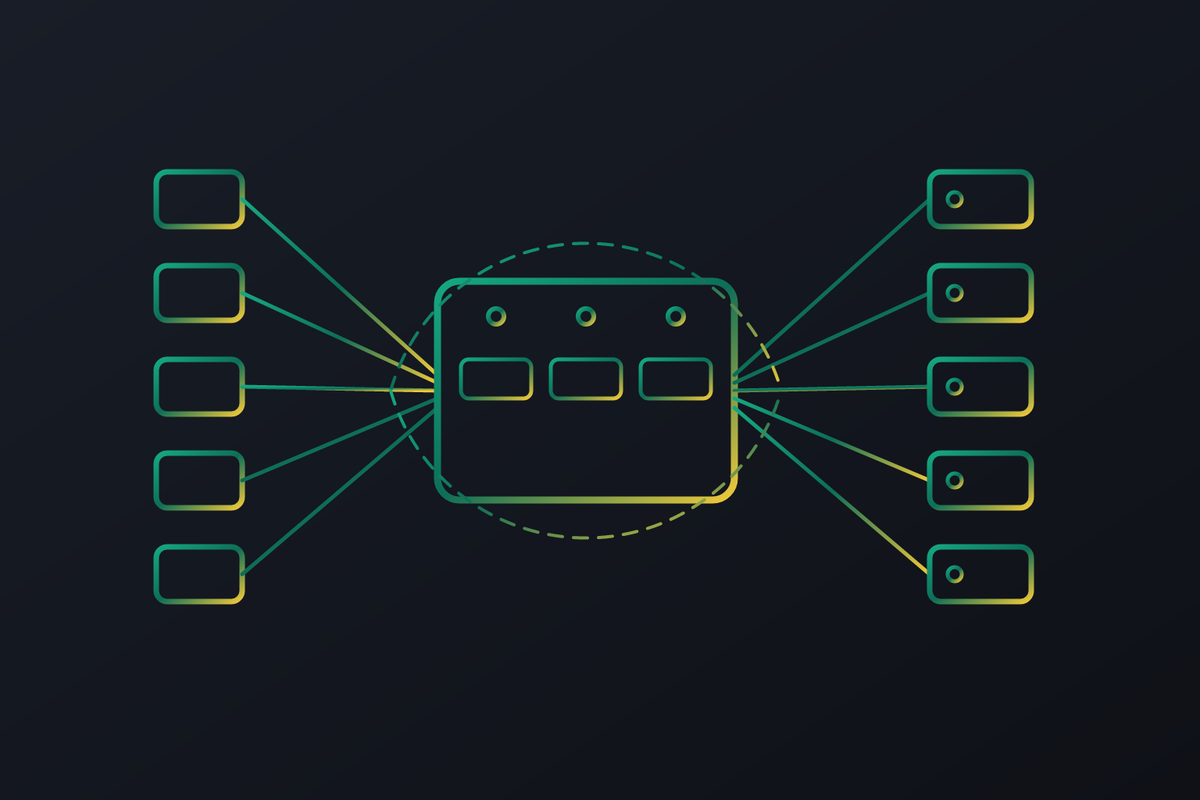
An LLM gateway is a reverse proxy that sits between application code and the model provider's API, presenting one stable interface no matter which provider ends up handling a given request underneath.
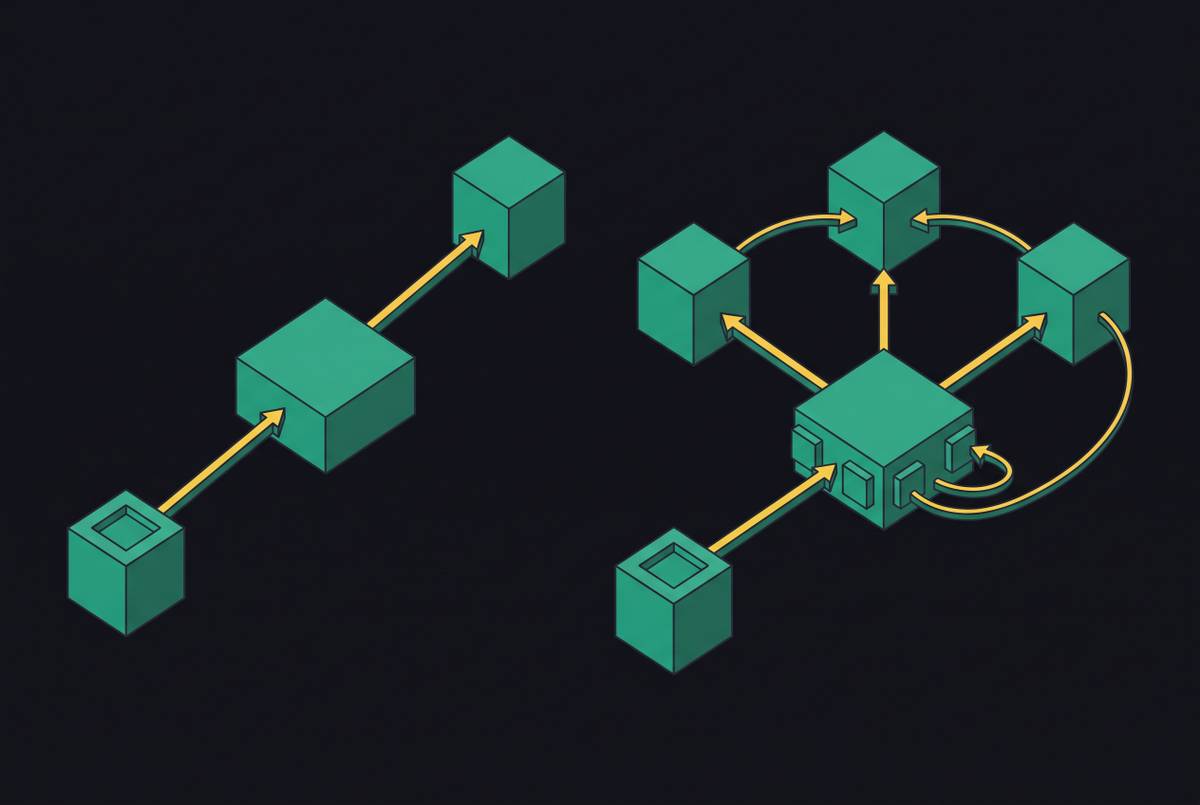
The value here is decoupling, plain and simple. When application code talks to a single endpoint, swapping providers, adding a fallback path, or rebalancing load across keys becomes a config change instead of a code change. That's the gap between an afternoon fix and a two-week sprint, and for a team shipping fast, that gap matters more than almost anything else on this list.
The gateway owns provider authentication, routing logic, retry and fallback behavior, rate limit tracking, spend accounting, and observability. The application sticks to prompt construction, response parsing, and business logic; nothing provider-specific leaks into it. Skip that split, and every service, every team ends up solving authentication, retries, and rate tracking on its own, usually inconsistently, and usually in ways nobody bothers to write down.
This isn't a niche pattern anymore. Industry analysts project that by 2028, a large majority of software teams building multimodel applications will run an AI gateway, up from a much smaller share in 2025. Teams still hardcoding provider calls into five different services are building on borrowed time, and the direction here isn't ambiguous; waiting it out isn't a real strategy.
A few named options define the current landscape. LiteLLM offers an open-source, unified API across a large number of providers; it's self-hosted, so the operational weight (uptime, scaling, patching) stays with the team running it. That's the trade-off with any self-hosted gateway: it moves complexity around rather than removing it. A team ends up owning a piece of infrastructure on top of the product it was actually trying to build, and that's worth admitting up front rather than discovering six months in, mid-incident.
How a gateway resolves rate limit pressure through queuing, fallback, and load distribution
Request queuing is the first lever. The gateway absorbs bursts of traffic and smooths them against the provider's actual enforcement window, so a spike on the application side doesn't turn straight into a wall of 429 errors.
A well-built gateway also enforces its own sub-limits, matching the shorter windows OpenAI actually polices, instead of just tracking a naive per-minute average. That's the gap between heading off the burst pattern that triggers a limit and cleaning up after the damage is already done.
When a provider limit does get hit, fallback routing takes over. That can mean automatic failover to a different provider entirely, Anthropic or Google Gemini, for the same class of task, with the application never seeing an error. Or it can stay inside OpenAI's own catalog: route to GPT-4o-mini when GPT-4o's TPM is exhausted, since the two models draw from separate quota pools. Either way, fallback rules need to be explicit and reviewable. A gateway that swaps models silently, with no record of why, turns debugging into guesswork, and guesswork at 2am is how a ten-minute fix becomes a two-hour incident.
Load distribution runs on the same logic at a wider scale. The gateway spreads requests across multiple provider keys or projects, weighing how much of each key's quota is already used, which multiplies available headroom without the application ever needing to know multiple keys exist. Spend-aware routing pushes the idea further: the gateway can steer traffic away from a provider as it nears its spend cap, not only after a request gets rejected. That's exactly what would have caught the Tier 1 $100 ceiling before it turned into a mystery. Per-key and per-project budget limits, enforced at the gateway itself, keep one team or one runaway agentic workflow from eating quota everyone else needs.
What disappears from application code is the whole pile of backoff logic, retry loops, provider key management, and 429 handling. That logic lives in one place now, applied the same way for every caller, instead of rebuilt five different ways across five different services, each one slightly wrong.
Spend visibility as a prerequisite for managing limits intelligently
Rate limits and spend caps are two faces of the same constraint. No team can route around either one without knowing, in real time, which models, keys, and projects are actually burning through budget.
The scale of this problem is bigger than most teams assume. The FinOps Foundation's 2026 State of FinOps report found that a large majority of enterprises reported AI costs running past their original projections, and the share of FinOps practitioners responsible for managing AI spend grew dramatically between 2025 and 2026. Token use is outrunning budget planning across the board, and Uber's own AI budget ran out in four months, a full year's allocation gone in a third of the time. That's what happens when multiple teams get access and nobody's watching the total.
Without a gateway, getting a clear spend picture means stitching together data from separate provider dashboards, usually after the money's already gone, and by the time anyone spots the trend line, the budget's spent.
A gateway's observability layer should show real-time token use broken out by model, provider, virtual key, team, and project, rather than a lump sum on an invoice at month's end. It should tie spend back to a specific workflow or product surface, and it should alert at thresholds a team sets itself, rather than getting pieced together after the bill lands. Teams running OpenAI alongside other providers also run into pricing models that don't line up cleanly: per-token rates, cached-token discounts, consumption tiers. Normalizing all of that into one view is exactly the kind of work a gateway should handle quietly in the background, without anyone having to ask for it.
This is also what makes fallback routing safe to trust. If the gateway doesn't know what the fallback provider actually costs per token, routing away from an OpenAI limit just trades a rate problem for a bigger invoice.
Routing across providers as a deliberate strategy, not a last resort
Providers outside OpenAI shouldn't only show up as a backup plan for when things break. Treating a second provider like a fire extinguisher, bought and forgotten until there's smoke, misses the point: the same routing logic that catches rate limit overflow should be routing by cost, speed, or task type every single day, under totally normal conditions, not just during an emergency.
Research out of UC Berkeley, the RouteLLM project presented at ICLR 2025, found that sending only a fraction of queries to a high-capability model, and handling the rest with something cheaper, preserves most of the output quality at a much lower total cost. The principle holds even for teams that never touch that specific router: treating every query as if it needs the flagship model is money left on the table, full stop.
Three strategies show up repeatedly. Complexity-based routing predicts how hard a task is before generation even starts, sending simple queries to faster, cheaper models. Cascade routing tries the cheap model first and escalates to something stronger only if the output misses a quality bar. Semantic routing sorts by topic or domain: code generation to one provider, summarization to another, matching each task type to whichever model actually handles it best.
None of this holds up if it's hardcoded into individual services. Logic like that drifts, gets skipped under deadline pressure, or forces a code change every time a provider updates pricing or performance, and it stays consistent only when it's enforced centrally, at the gateway, where one change applies everywhere at once. And intentional routing needs visibility attached: which model got which request, and why, logged and reviewable, not a black box making calls nobody can audit later. Providers offering hundreds of models tend to show more uneven performance across that catalog; gateways built around a smaller, curated set of integrations can usually hold tighter, more consistent latency per model.
What teams should look for when evaluating gateway options for rate limit management
Skip the feature checklist. Evaluate against the actual pressure points that cause the pain in the first place, because a long feature list means nothing if it doesn't solve the specific failure a team is having.
Start with queuing. Does the gateway smooth bursts on a sub-minute basis, matching how OpenAI actually enforces its windows, or does it just retry after the 429 already happened? Then check fallback control. Are the fallback chains explicit, visible, and auditable, or is the platform making silent routing calls nobody can trace back? A team should see exactly what triggered a fallback and where the request landed, every time, not just when someone remembers to check.
Spend-aware routing matters just as much as rate-aware routing. Can the gateway steer traffic away from a provider as it nears its spend cap, or does it only react once a request gets rejected outright? Multi-key load distribution is worth checking too: can the gateway spread requests across several provider keys or projects with budget limits enforced per key, instead of treating the whole organization as one undifferentiated pool?
Observability needs to run in real time and break down by team, model, and key, rather than an aggregate export that finance has to piece together by hand once a month. On the self-hosted question, tools like LiteLLM put deployment, scaling, and uptime in the team's own hands, which makes sense when infrastructure ownership is already centralized and staffed, and makes a lot less sense when it isn't. Provider breadth helps too; more providers means more fallback paths and more routing flexibility, but only if the gateway actually normalizes their differing pricing into one view instead of leaving five dashboards open across five browser tabs. Concentrate, for instance, is a managed model router that covers 130-plus providers through a single API key, with no separate credentials to manage per provider.
The real test comes at 2am when a rate limit gets hit in production. Does the system absorb it automatically, leave a clear trail of what happened, and give the on-call engineer enough to confirm the fallback landed where it should? Or does the application start throwing errors while someone scrambles across three provider dashboards, trying to figure out which limit just broke, with no idea where to look first?