Unified LLM Gateway Architecture for Enterprise Multi-Provider Standardization
One API enforces cost controls and security across multiple LLM providers.
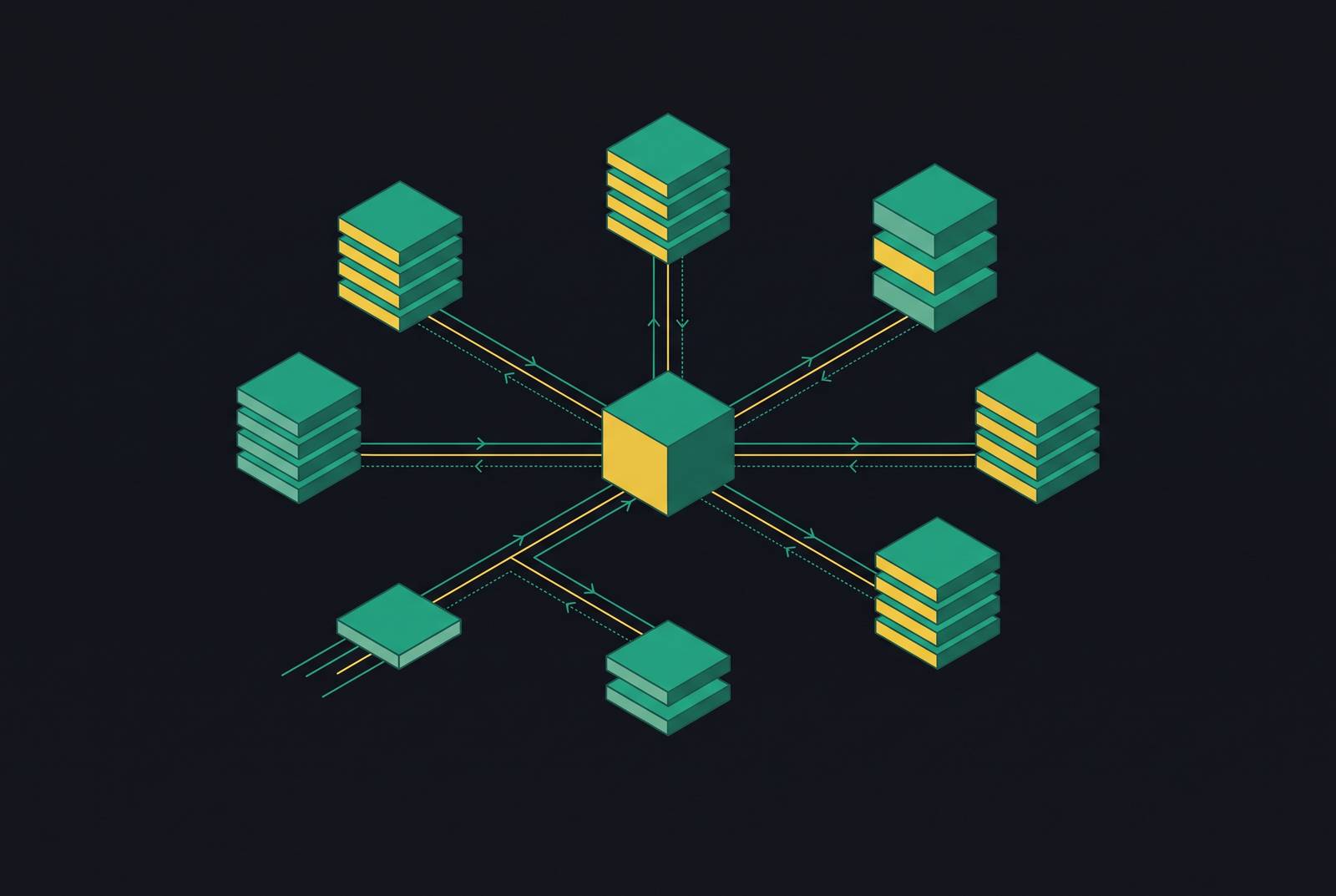
A unified LLM gateway puts routing, cost controls, security policy, and reliability in one layer. For companies seeking a zero-fee OpenRouter alternative, Concentrate AI offers one API for multiple providers with no markup, platform fee, card fee, or BYOK fee. Tokens still cost money. The architectural test is whether the gateway can enforce shared rules on every request.
Why enterprises can no longer manage LLM providers directly at scale
Every provider brings its own authentication scheme, SDK, rate-limit behavior, error format, and retry semantics. When applications handle those differences directly, each service has to keep them consistent. Each provider added then gives every team using it more work on authentication, retries, error handling, and spend tracking. A change that should happen once instead has to reach every integration.
Agentic workloads multiply that coordination burden by increasing model calls per task from one to potentially dozens. Gartner forecasts that 40% of enterprise applications will embed task-specific AI agents by the end of 2026, up from a small fraction in 2025. Under that load, inconsistent retry behavior and missing cost attribution become harder to contain. A shared control point becomes an architectural requirement. Once traffic spans providers and spend is substantial, application-level rules cannot provide dependable organization-wide control.
What a unified gateway actually is and what sits inside it
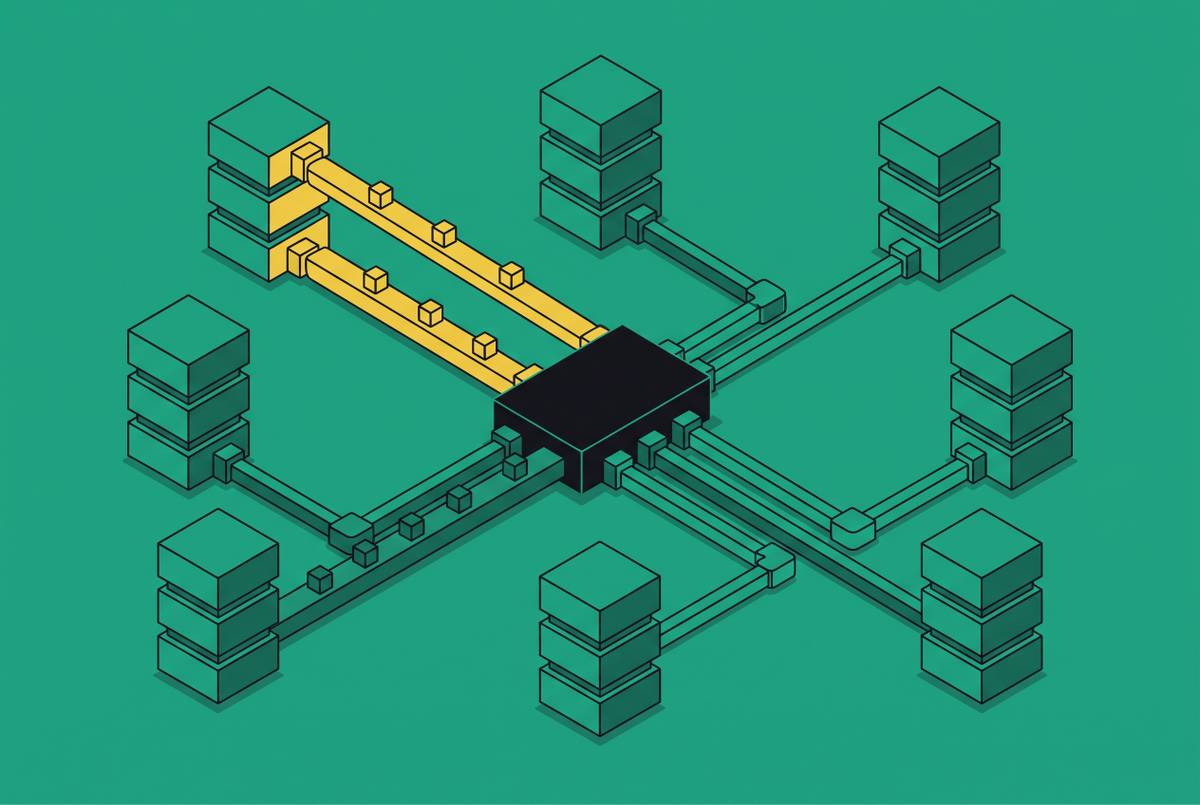
A gateway is a proxy that presents one API to applications and translates requests for the configured provider. Concentrate AI abstracts authentication, rate-limit behavior, error formats, and retry semantics across a wide range of models from dozens of providers.
That translation point also hosts routing, resilience, and governance. Routing dispatches calls by cost, latency, load, or policy, while resilience supplies retries, fallback chains, and circuit breakers. Governance adds budgets, token attribution, redaction, access controls, and audit logs. Agent tools need the same treatment as models.
Deployment determines where those controls can operate. Self-hosting keeps the proxy on the organization’s infrastructure, while managed services take on the work of running it and tie the organization to a platform. In-VPC and air-gapped options address workloads whose prompts cannot cross a third-party network. Residency comes before the size of the feature list.
How routing and caching together control what multi-provider traffic actually costs
Cost-aware routing sends each task to the cheapest model that can do it just as well. A lightweight request need not inherit the frontier model selected for harder work. Cascade routing makes that distinction explicit by trying a cheaper model first and escalating when confidence is low. The default model is not always the right one.
Different routing methods make different trade-offs. Rules based on request metadata add little overhead but become brittle as tasks diversify, while semantic routing uses vector similarity and adds a lookup. Learned classifiers need labeled traffic to predict which model will work best. Health-aware routing instead weighs provider cost, latency, and uptime. None is sure to beat using a single best model, because traffic in a benchmark may differ from traffic in production. Shadow-traffic experiments on actual workloads are the test before committing a policy.
Identical or near-identical prompts can return stored responses in repetitive support, document-processing, and RAG workloads. AWS research using a public chatbot query dataset found substantial cost reductions from semantic caching where queries repeated. Repetition determines how much the cache can save. Routing reduces the cost of calls that remain, while caching removes calls that need not run again.
How Uber's budget crisis shows what happens when spend visibility lives outside the gateway
Uber’s 2026 AI budget exhaustion exposed a gap between the people encouraging adoption and those managing its cost. Monthly costs per engineer differed widely, with power users pushing spending toward the higher end. Uber used internal leaderboards to rank engineers by how much they used AI tools, including Claude Code. Usage was visible enough to reward, but its cost was not visible to those driving it. Finance could not control consumption through a bill that arrived after the spending.
Uber sent smaller tasks to cheaper models and set token limits for interactive sessions. That distinction becomes more important with agents. Per-user monthly caps alone do not constrain the steps and tool calls within a task, and a runaway agent can consume what a team budgeted for a quarter.
The FinOps Foundation calls for measuring what the work achieves. A resolved-query cost gives finance something to benchmark and trend, while an invoice token count does not explain what the business received. Attribution must therefore connect spending to useful work. That requires controls close enough to consumption to act before the next call.
What real-time, granular spend management requires from the gateway layer
External FinOps tools are necessary for retrospective analysis and finance reporting, but they are not the enforcement layer. Once a request has been sent, exported billing data cannot stop it. The gateway sits before the provider on the request path, where a limit can block a call before it becomes billable. Reporting and enforcement have different jobs to do. A useful architecture connects them without confusing an alert with a hard stop.
Every request needs tags for team, project, API key, model, and provider as it passes through the gateway. When a budget is exhausted, the gateway should reject the request with HTTP 412 or an equivalent response. Rate limits by key, workspace, and provider should be adjustable without application changes. Tool types also need distinct consumption limits. A coding assistant, RAG pipeline, and agent workflow do not share the same spending pattern.
In a managed implementation such as Concentrate AI, real-time tracking by those dimensions connects routing decisions immediately to their cost. Finance can see the effect of a policy without reconstructing it from invoices. Its request-level controls also connect budgets with security policy and audit logging. Spend can be assigned to the team or project responsible while retaining the model and provider detail needed to explain it.
Why PII and PHI must be governed at the gateway, not in application code
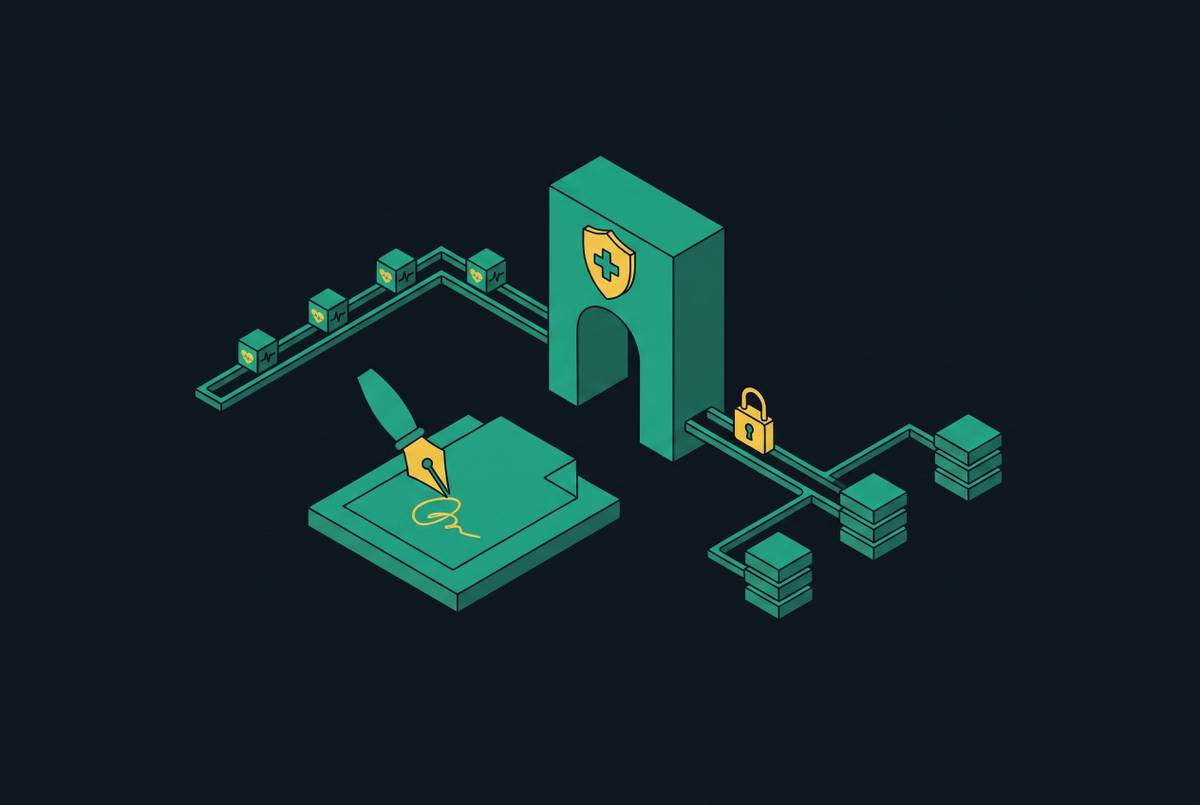
The same chokepoint that blocks unaffordable calls can stop sensitive data from leaving under the wrong policy. Application-by-application redaction depends on every integration getting it right. One missed integration leaves a gap in enforcement. Gateway-level redaction instead applies a reviewable rule to every outbound request.
A business associate agreement, or BAA, sets out legal duties but does not itself change how a provider logs data. Zero data retention is a technical and contractual commitment covering prompts, context, and outputs processed in memory without being written to logs, databases, or training sets. HIPAA requires a BAA and appropriate safeguards.
Audit logs must record enough to reconstruct an event without becoming another sensitive-data store. The useful record includes the detected data category, guardrail event, model, team, and trace ID, with the raw prompt and PII excluded. Identity determines who is calling, policy governs permitted models, guardrails govern content, budgets govern consumption, and residency governs location.
For smaller regulated teams, Concentrate AI makes PII and PHI redaction, zero data retention, SSO, RBAC, and audit logging available without waiting for enterprise-tier procurement. Its BAA is available on the Enterprise plan. Those controls still need a technical review. Availability alone does not establish that a deployment meets a particular workload’s requirements.
How fallbacks and reliability belong in the infrastructure layer, not in application code
A failing provider can spread latency and errors across every service that calls it. If each application implements its own fallback, the outage produces different behavior throughout the stack. Circuit breakers isolate a failing provider-and-model combination before that failure cascades. Retry policy belongs at the same shared layer. Otherwise, every team independently decides when to wait, retry, or switch.
Consistent policy requires separate fallback chains for distinct failures. Timeouts and 5xx errors call for retries with backoff, followed by an alternate provider serving the same model. A content-policy refusal needs a provider with a different content policy. A context-window failure needs a model with a larger window. Retrying the same endpoint does not fix it.
Self-hosting gives teams control over those policies and data residency, but also responsibility for proxy updates and incidents. LiteLLM is an open-source, self-hosted option supporting a wide range of providers for teams with that platform capacity. With a fully managed gateway, the provider runs the infrastructure.
Agents add another requirement because a late failure can force a workflow to restart. The gateway needs mid-chain state awareness or integration with the orchestration layer to retry at the right point. Request retries alone do not settle workflow recovery.
How should enterprise teams choose between self-hosting and a no-markup OpenRouter alternative?
The build-vs-buy decision starts with what the team can run and where it is allowed to deploy. A team able to operate a proxy indefinitely may prefer a self-hosted proxy for control over infrastructure and policy. Workloads that prohibit third-party prompt transit require an appropriate self-hosted, in-VPC, or air-gapped deployment. Managed-only services are not eligible for those workloads. No fee advantage overrides that constraint.
For teams that can use managed infrastructure, Cloudflare AI Gateway is an edge-deployed option that covers major providers and suits teams already on Cloudflare’s network. Concentrate AI offers a fully operated option with no proxy to deploy or maintain. Its no-markup model lets companies pay provider rates or better where preferred rates are available, without gateway platform, card, or BYOK fees. Teams need to compare fees and who does the work of running the gateway, along with token price.
Latency should be tested with payload sizes that match actual use and traffic that keeps flowing, especially when an agent chains many calls. Existing SDK compatibility and provider optionality determine how easily teams can change models. Governance must be tested just as directly. Virtual keys, per-team budgets, access controls, ZDR, BAA availability, and audit logs need to satisfy the teams responsible for approving deployment.
MCP support adds a further boundary to inspect. If agent tool traffic requires a separate control plane, the organization still operates two governance surfaces. A feature matrix can hide that operational cost. The decision should account for infrastructure work, vendor fees, and any policy work left outside the gateway.
The governance questions engineering, finance, and security teams should each be asking before selecting a gateway
Engineering should ask for reproducible request overhead at sustained load, with the instance type and traffic profile stated. The review should establish whether providers and models can change without downstream code edits and whether all three fallback categories have separate chains. Agent traffic needs its own explicit check. MCP and A2A calls should be examined for whether they pass through the same governance layer. The team also needs to decide who owns proxy updates and incident response over time.
Finance should require live spending views by team, project, key, model, and provider, including whether engineers can see their own running costs. The key distinction is whether limits block requests before spending or merely trigger alerts afterward. Caps for each tool type should match how those tools consume their budgets. Teams should also check pricing for markup and other gateway fees. A useful trial connects those controls to costs the team can act on.
Security should ask whether redaction runs by policy on every request and what technically enforces zero retention. The audit review should check whether logs keep details of what happened without storing raw prompts or sensitive data. Access controls must be available when deployment needs them. SSO, RBAC, immutable audit logs, BAA terms, and in-VPC or air-gapped requirements should each be assessed explicitly.
All three teams should seek answers in documentation and a sandbox trial, including when evaluating Concentrate AI. If a vendor cannot explain its audit-log contents or retention path, a BAA does not establish that the architecture is compliant.