Audit Logging Standards for AI Usage in Regulated Industries
Compliance auditors demand individual attribution in AI logs, and most deployments lack it.
Regulated industries running AI in 2026 face a set of overlapping logging rules that, together, turn a complete and attributed audit trail into a legal floor, not a nice-to-have. In March 2026, the SEC announced a dedicated SOX enforcement group aimed at audit firm misconduct, and that's a clear signal that AI-touched internal controls will get closer scrutiny in the audit cycles ahead. The EU AI Act's high-risk provisions reach full enforcement in December 2027, and Article 26(6) already requires deployers of high-risk AI systems to keep logs for at least six months, while Article 12 requires those systems to be built so they can record events automatically. Those rules ask for traceability, accurate records of inputs, identification of the people involved, and a clear link to the reference data the system used.
None of this arrives as a single rulebook. All three apply at the same time, and each carries its own retention period, its own definition of a complete record, and its own penalty for falling short.
The gap between what's required and what organizations can actually produce is wide. The Kiteworks 2026 Data Security and Compliance Risk Forecast found that a third of organizations have no audit logs. That gap is the exact opening regulators are already positioning to use. Regulators govern data, not models. HIPAA doesn't care whether protected health information was touched by a human analyst or an AI agent. The obligation is the same either way, and so is the fix.
Logging and retention requirements by framework
Each framework asks for something specific, and meeting one does not mean the others are covered. Customer service AI that only influences those decisions, rather than making them, usually falls into the lower-risk tier, though high-risk systems carry mandatory human oversight, conformity assessments, pre-deployment registration, and ongoing monitoring after launch.
Financial services carry the longest retention clock in the stack. SOX requires at least seven years of operational logs and seven years of audit work papers. The Federal Reserve's SR 26-2 guidance on model risk management, which replaced SR 11-7 in April 2026, applies to traditional and non-generative AI models that influence financial decisions (generative and agentic AI currently sit outside its formal scope), and it treats documented development, independent validation, and ongoing monitoring as requirements. NYDFS Part 500, clarified by an October 2024 industry letter, tells covered entities to fold AI-related cybersecurity risk into their existing cybersecurity programs. PCI DSS applies to any AI system touching cardholder data, and it calls for unique identification of every AI agent, minimum necessary access, continuous logging, and strong cryptography.
Healthcare runs on its own clock. HIPAA's Privacy Rule and Security Rule call for minimum necessary data access, access controls, and audit trails, and treat encryption of protected health information in transit and at rest as an addressable specification, with proposed 2026 amendments that would make that encryption mandatory once finalized. HIPAA requires six years of retention for security documentation under 45 CFR § 164.316(b)(2)(i), and while the law doesn't spell out a separate six-year window for raw audit log data, six years is the standard applied to those logs in practice.
Governance frameworks round out the picture. The NIST AI Risk Management Framework organizes its obligations into four functions: GOVERN, MAP, MEASURE, and MANAGE, with GOVERN as the base the other three sit on. ISO/IEC 42001 adds a management framework for AI systems that now functions less as an optional add-on and more as the foundation for a defensible, trustworthy deployment. The CFPB has made clear that incorrect information delivered by an AI chatbot counts as a UDAAP violation. The log has to capture not just that a response went out, but what it said and what it was based on. A healthcare company operating in the EU is carrying HIPAA, GDPR, and the EU AI Act all at once, and each one wants something slightly different from the same log entry.
The hardest requirement is individual attribution, and most deployments fail it
The most common gap in enterprise AI deployments isn't missing logs. HIPAA's unique user identification rule, GDPR's accountability principle, and SOX's audit trail requirements all expect individual attribution, and a service account can't provide it, no matter how detailed the rest of the log is.
A typical finance organization, looking closely at its own deployment, tends to find the same three holes first: AI running under API keys with no human identity attached, confidence scores standing in for actual reasoning, and retention policies shorter than the seven-year SOX floor. An examiner reviewing an automated decision wants to know why the system acted, not just that it acted, and a log that shows the output but hides the reasoning behind it can't answer that.
System prompts, safety filters, and vendor certifications all operate at the model layer, but compliance auditors are looking at the data layer, which is beyond the reach of model-level controls. Teams reviewing their own stack against this standard should check whether a human identity sits behind every AI call that touches regulated data, because that single field is the one most likely to be missing.
What a complete, examiner-ready audit record must contain
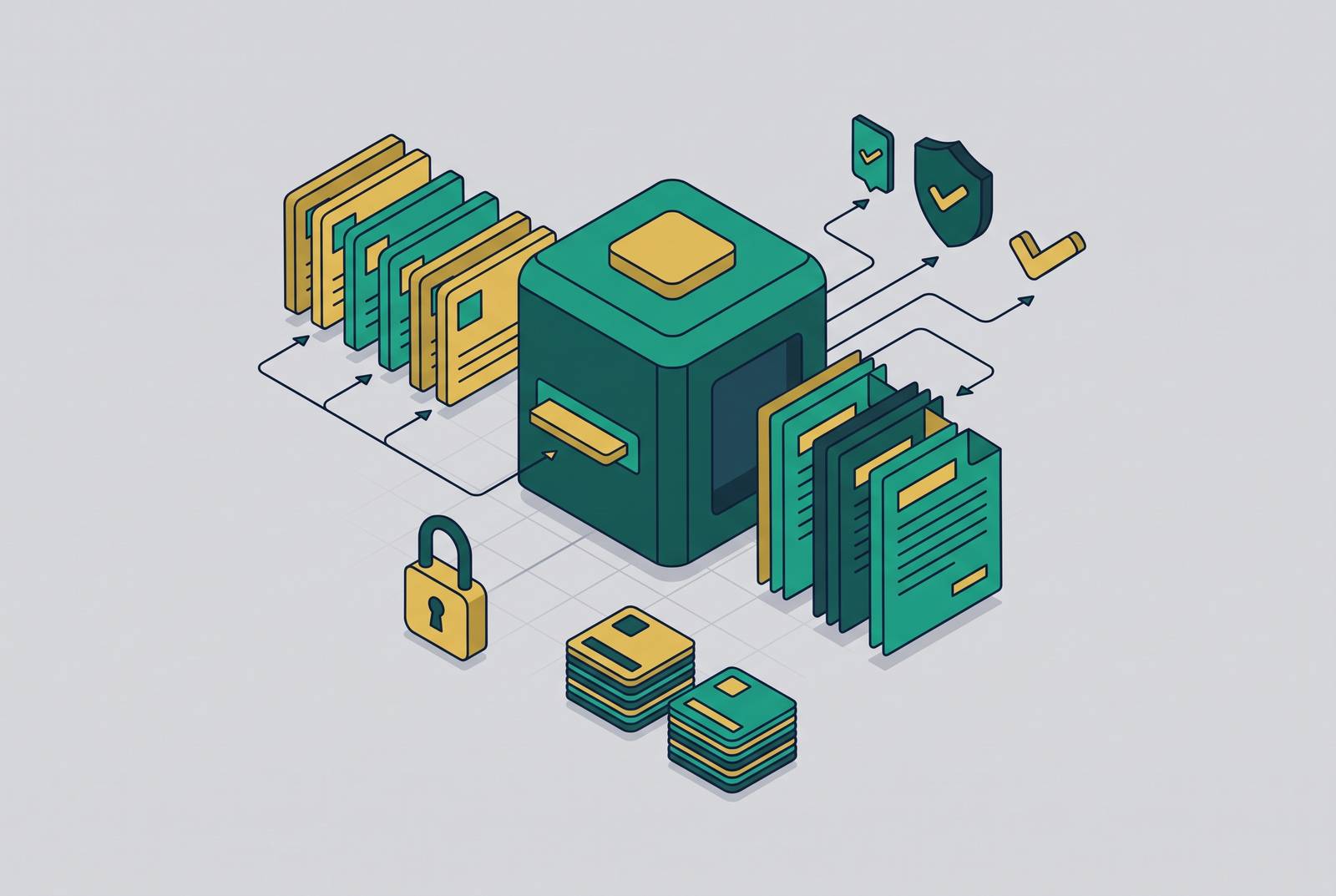
An audit trail that will hold up under examination is not a system log and not a chat transcript. MLflow's 2026 AI auditing guide lays this out in three layers: the decision output itself, including the model's response, its confidence level, and any intermediate reasoning steps; a snapshot of the environment, covering model version, prompt template, data version, and configuration active at the moment of the decision; and documentation of human oversight, including review actions, approval timestamps, and any override events.
A 2026 checklist built for finance, healthcare, and banking spells out specific fields that need to sit inside every entry. And every entry needs an authenticated human user identity attached to it; this field is most often missing, and AI running under a service account fails HIPAA's individual attribution requirement.
Completeness matters as much as the fields themselves. A record needs every action the agent took: each tool call, each piece of data read, each field written, each message sent, in order and without gaps. If an agent looked up a customer's KYC status, ran a risk check, and updated an address, all three steps need to show up, not a summary of what happened. The record also needs to be immutable. If a trail can be edited after an incident, it proves nothing, because nobody reviewing it can tell whether it reflects what actually happened or what someone decided afterward should have happened.
Reasoning has to be attached too, in a form a non-technical reviewer can actually use. And the whole bundle has to be packaged so a compliance reviewer or an outside regulator can walk through it without needing a data-science query to interpret it. Getting this schema right before a system goes live is far easier than trying to build it afterward, which is the problem the next section gets into.
Logging as an architectural decision made before deployment, not after
The gap most organizations run into isn't a lack of logging tools. Designing a proof-bundle schema before a system goes live costs far less, and breaks far less, than retrofitting audit infrastructure onto a system that's already running in production and already handling real customer data.
When logging logic gets built separately into each application instead of enforced in one place, enforcement drifts apart over time. The result is several inconsistent records that can't be reconciled when an examiner asks for a single coherent account of what happened.
Shadow AI makes this worse. Employees pasting source code, legal work product, or M&A data into AI tools nobody approved creates a leakage path that no compliance framework excuses, whether the use was intentional or not, and logs that don't capture these interactions leave the organization blind to exactly the risk it most needs visibility into. Catching it requires logging infrastructure built from the start to support ongoing review, not a snapshot taken once and filed away.
Producing a defensible record is a structural requirement of the platform itself, not a task bolted on after something goes wrong. Closing these gaps before a regulatory walkthrough costs far less than fixing a finding in the middle of an audit cycle.
How a gateway layer standardizes logging across every model call
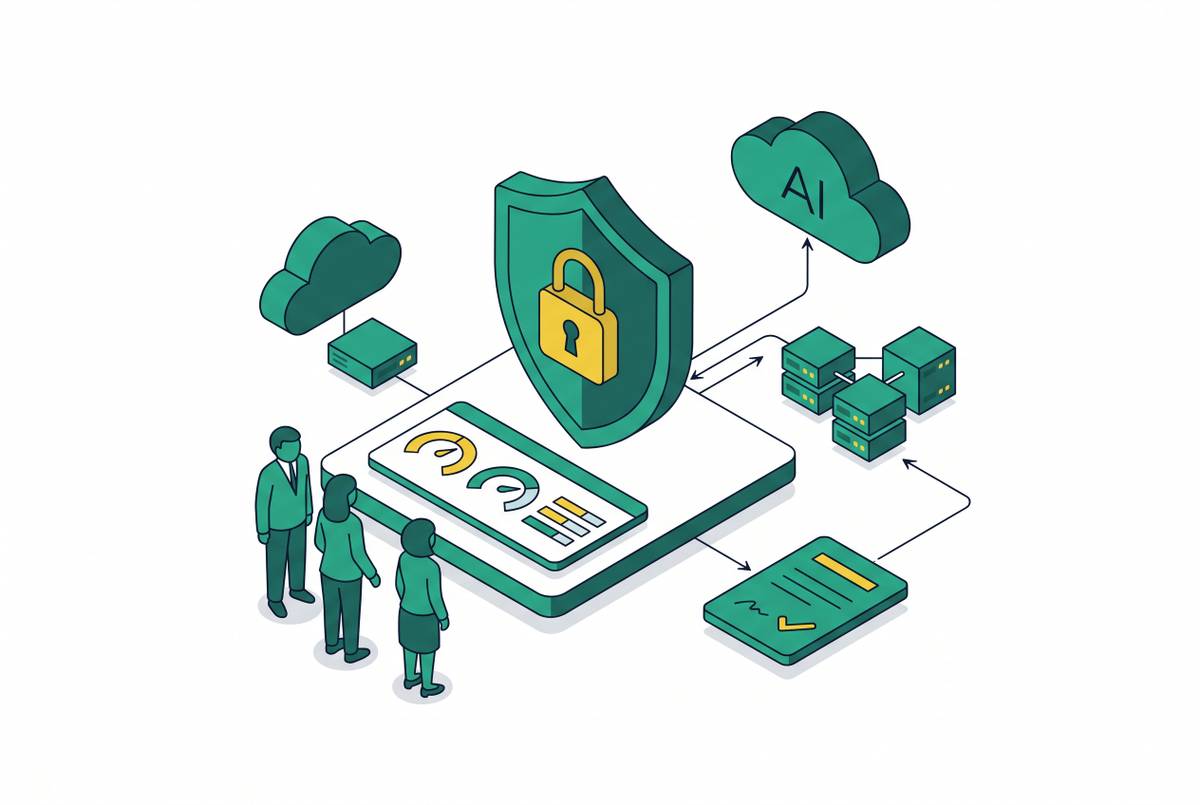
Routing AI traffic through a single gateway layer that enforces logging, PII redaction, and identity attribution the same way every time solves both problems, instead of rebuilding those controls separately inside every service that happens to call a model. The gateway sits between the application layer and the model providers, and because every call passes through that one point, logging policy applies uniformly instead of depending on whether each individual team implemented it correctly.
The identity attribution gap gets closed here. The convergence of these frameworks points to a deeper architectural truth: regulators govern data flows, not models. Redaction and access controls need to be enforceable and reviewable before data ever reaches an outside AI vendor, which simplifies the audit itself and closes the gap between what regulators expect and what most organizations can currently show.
Attribution in a setup running multiple models and multiple providers requires every request to carry its originating team, API key, model, and provider, with those attributes locked in place and logged alongside the input, output, and timestamp. Keeping provider keys inside the gateway's vault, with applications holding only short-lived, scoped tokens, also limits the damage if an application token leaks: it's rate-limited, budget-capped, scoped to its purpose, observable, and can be revoked instantly, which directly addresses the kind of credential-leak attack where a stolen key gives an outsider open access to a provider's quota.
Managed gateways such as Concentrate AI offer this control layer without asking a team to build or run the infrastructure themselves, with a single API reaching more than 130 models across 21 providers, real-time spend visibility broken down by team, project, key, model, and provider, and structured JSON logs that export cleanly enough to satisfy an auditor and speed up a security investigation when something goes wrong.
What continuous monitoring and independent audit add after deployment
Logging infrastructure that's designed correctly at deployment still isn't enough on its own. An organization also has to show continuous oversight, documented interventions, and independent validation, because AI behavior drifts over time, and a snapshot taken once can't prove a control is still working today. Continuous monitoring keeps the same infrastructure the earlier sections describe running after launch, for as long as the system stays live.
Performance can diverge because of data drift, a shift in the underlying distribution, or a change somewhere upstream in the pipeline, and a model that passed its initial evaluation can fail silently months later without throwing an obvious error. Every intervention after that also needs to be logged on its own. Retraining a model, adjusting a threshold, or rolling back a release all need a record of the reason, the reviewer, and the outcome, because those records are the proof that governance happened.
Internal and external audits do different jobs here. And the payoff isn't only regulatory. If organizations can show continuous, documented oversight, they attract enterprise clients and institutional investors who require evidence of AI reliability before they'll sign a contract, and that confidence turns directly into deals won and friction removed from the next regulatory review.
A practical checklist for teams assessing their current audit logging posture
Most teams overestimate where they stand, because having logs and having the right logs aren't the same thing, and the gaps tend to hide in the specific fields examiners actually ask for. On attribution, the first question is whether every AI call in production logs an authenticated human user identity rather than just a service account or API key, and whether SSO through OIDC, OAuth 2.0, or SAML is integrated so that AI usage ties back to a real corporate directory identity rather than a shared credential nobody can trace to a person.
On data governance, confirm whether PII redaction is enforced at a central layer like a gateway rather than scattered across individual services, whether a signed BAA exists with every model provider that might touch PHI, and whether shadow AI use, meaning employees relying on unapproved consumer tools, is actually visible in the logs or blocked at the network level.
Last, on examiner readiness: can someone from compliance, or an outside regulator, pull up a specific past AI decision from the logs and reconstruct it without needing to run a data-science query to make sense of it, and are those logs exportable in structured JSON or an equivalent format that an auditor can actually work with? Teams whose AI traffic runs through a managed gateway will often find that several of these items, attribution, immutability, redaction records, structured export, are already handled at the infrastructure layer. That's a reasonable thing to check for, not a substitute for walking through the rest of the list.