How Gateway-Layer Token Substitution Lets Responses Return Original PII to the Caller Without Exposing It to the Model
Preserve customer names in LLM responses while keeping sensitive data away from model providers.
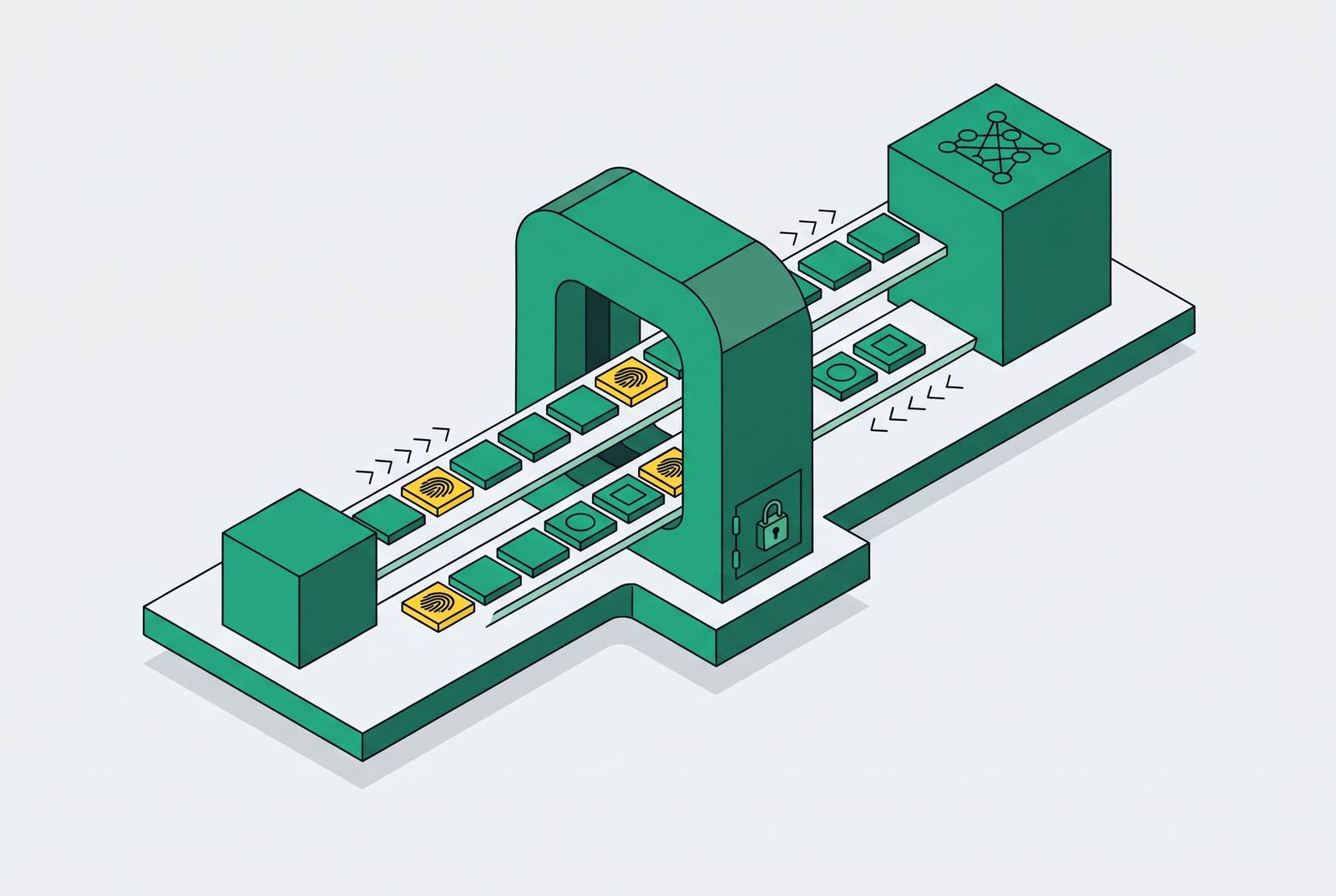
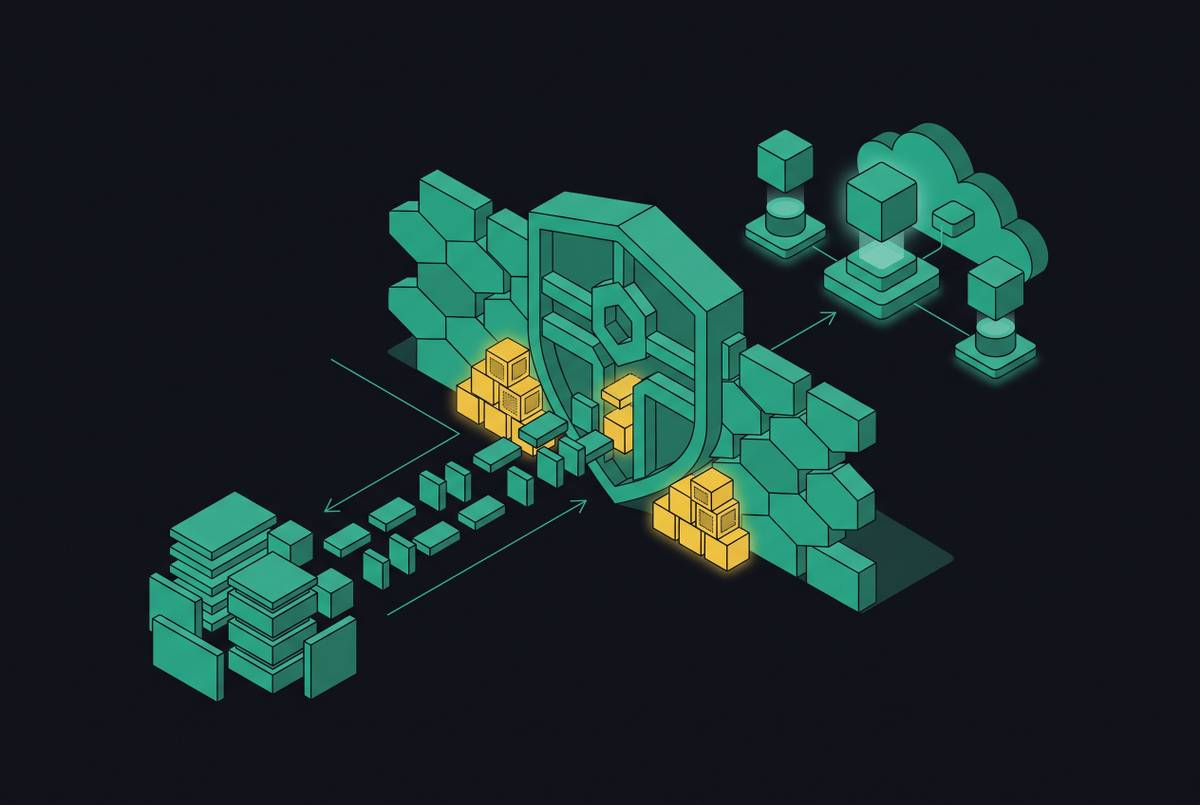
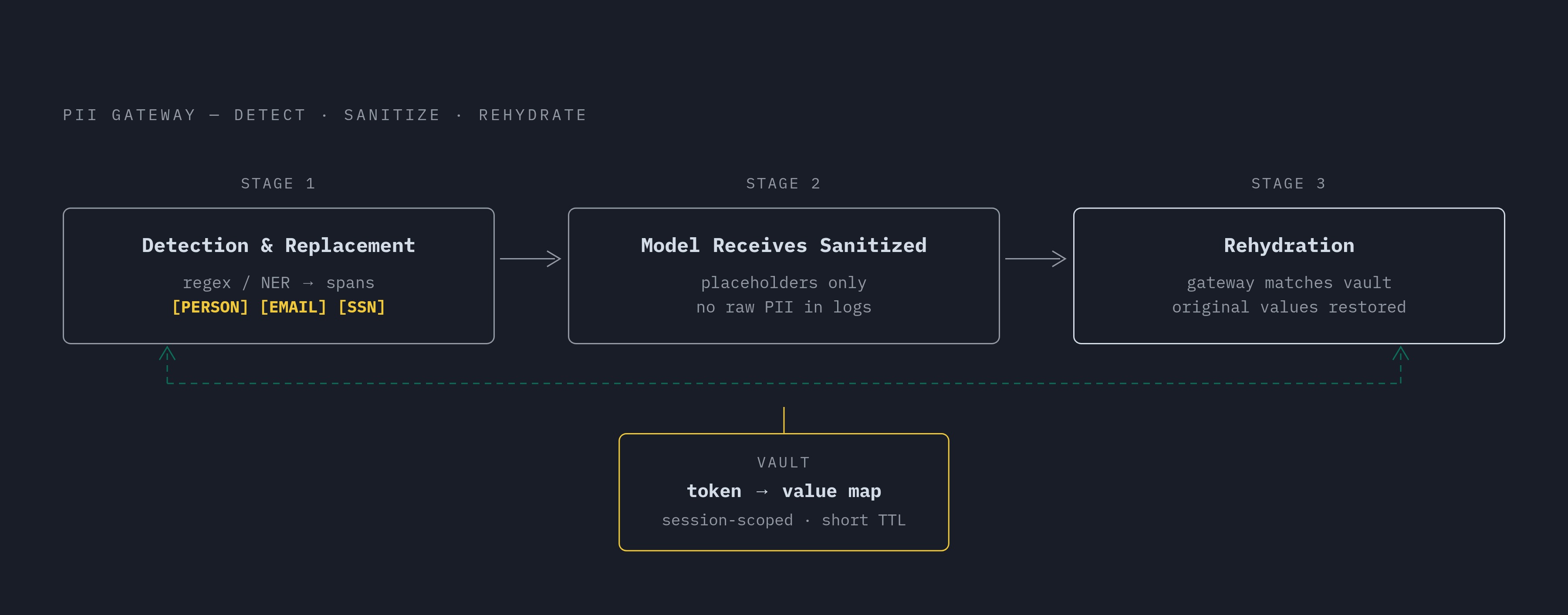
Gateway-layer token substitution keeps detected PII and PHI out of requests to model providers while allowing responses to return original values to the caller. It works as a reversible three-stage loop that replaces sensitive spans with typed placeholders, lets the model process sanitized text, and restores values on the response path. For the loop to be safe in production, detection, an isolated vault, and exact placeholder matching must all work together.
Why one-way redaction breaks personalization in production AI workflows
A support agent loses useful personalization when it cannot use the customer’s name. A healthcare workflow loses context when it cannot use the patient’s record, while a finance tool may fail to do its job if it cannot confirm the right account number. Yet sending those values to an external model creates exposure under GDPR, HIPAA, and CCPA.
One-way masking resolves that tension only when the original value is unnecessary. If a system replaces a name with a placeholder and discards the original, it cannot restore that name in the response. Blocking is appropriate when substitution would make a task unsafe, especially where execution depends on an exact account value. But many conversational tasks need the identifier only in the final response. Reversible substitution separates those needs rather than forcing a choice between exposing identifiers and removing personalization.
How do you enforce sensitive data redaction at the API gateway level?
The gateway belongs at the trust boundary, after authentication and before provider routing. Every outbound model call must pass through it. When that happens, one policy can cover requests from different services, teams, and model integrations. Application-side redaction cannot cover all those requests when only some clients have its checks. A new service or integration can bypass checks that remain perfectly functional in older code.
Centralizing the loop also separates privacy policy from application releases. Detector rules and substitution policies can be updated and audited without changing every service that calls a model. Provider-side filters occupy a different position entirely. They run after the provider has received the request, so they cannot prevent the initial transfer. GDPR treats sending personal data to a provider as processing, while PHI sent without a Business Associate Agreement raises disclosure concerns under HIPAA. The architecture must therefore account for what leaves the organization’s boundary as well as what a downstream system chooses to keep.
Stage one: detecting PII spans and replacing them with typed placeholders before the model sees the payload
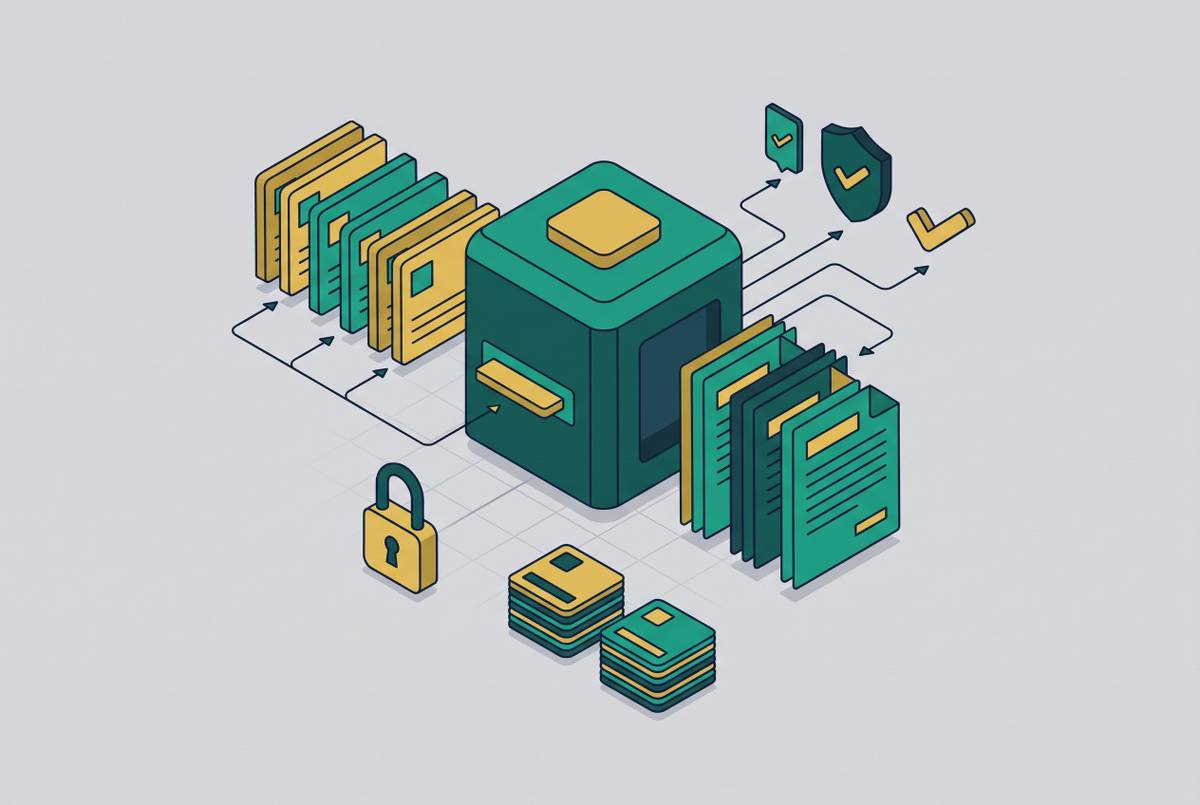
Detection begins by separating structured identifiers from free text. Regex and checksum validation can identify fixed-format values such as card numbers, SSNs, and IBANs, while named-entity recognition addresses names, addresses, and locations. No single detector covers both groups reliably. Ambiguous cases can require classifier or local model review, without sending the unresolved sensitive text to a third-party model for inspection. Each match returns an entity type, character span, and confidence score.
The span identifies what to replace, while the type preserves its role in the sentence. Placeholders such as [EMAIL_ADDRESS], [SSN], and [PERSON] tell the model what occupied that position without revealing the value. Detection also needs to extend beyond personal identifiers to sensitive credentials, including API keys, tokens, JWTs, and PEM private keys. Custom patterns are needed to detect internal customer IDs and proprietary codes. Tests for those patterns must check positive matches, close non-matches, boundaries, and how they work with other detectors.
The choice of action depends on the entity type and workload. Masking discards the original and works for logging, analytics, or training tasks that do not need to restore it. Tokenization keeps a reversible mapping for live responses, while blocking rejects requests that need an exact value to keep their meaning or stay safe. A payment workflow requiring an account number belongs on a non-LLM path because [BANK_CARD_REDACTED] cannot supply the exact value needed for execution. Monitor mode does none of these things. It records what detection would catch without preventing transmission, making it a tuning tool.
The vault: how the token-to-value mapping is stored, scoped, and kept off the prompt
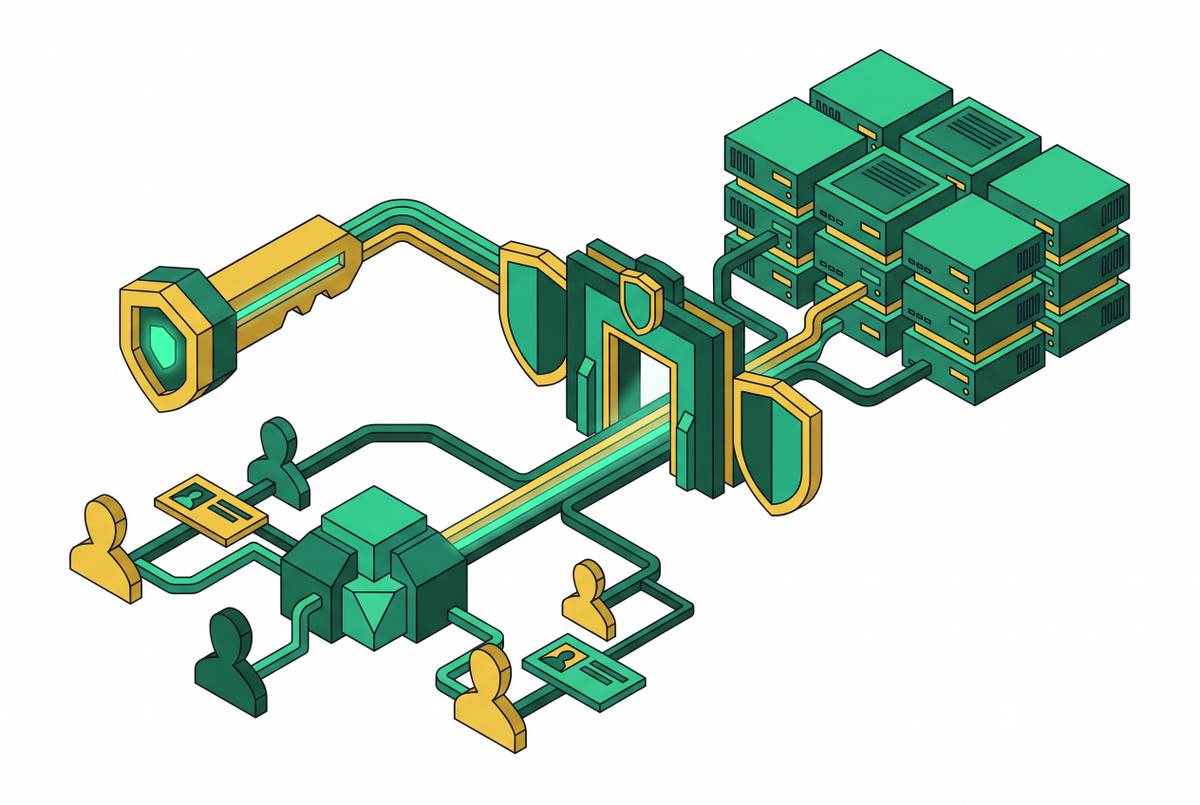
Reversibility depends on a mapping held outside the prompt. For each substituted value, the gateway stores the relationship between a random token and the original in a vault it controls. The mapping stays within the organization’s infrastructure. Sending it with the prompt, or giving it to the model provider, would defeat the isolation that substitution is meant to provide. A typed placeholder supplies semantic context, but restoration depends on its association with the correct vault entry.
Vault access must be scoped to the request or session and the caller. Otherwise, a token from one interaction could become a way to retrieve another user’s data. Entries should also have a short time-to-live, limiting their usefulness after a request ends or fails to complete. Recoverable originals should be encrypted rather than stored as plaintext in a broadly queryable database.
Stage two: what the model actually receives and why typed placeholders preserve task utility
A support ticket can retain its meaning after the customer’s name and email address have been replaced. The model can summarize the issue, classify intent, and draft a response that refers to the customer’s email without knowing its literal value. The task survives because the relationships remain visible. [EMAIL_ADDRESS] identifies a contact destination, whereas [REDACTED] removes that semantic signal. The same distinction allows a healthcare assistant to process a sanitized clinical note when its task does not require the hidden identifiers.
The model receives the surrounding text and placeholders. Its response can refer back to those placeholders so that the gateway can restore the corresponding values later. This capability depends on preserving their exact form. Provider logs, training pipelines, and abuse-monitoring systems receive the sanitized payload in which successfully detected originals have been replaced. That protection is specific to those values, however, and does not establish that the remaining text is anonymous or that detection caught every sensitive span.
Stage three: rehydrating the response so the caller receives original values, not placeholders
On the return path, the gateway intercepts the model’s output before delivering it to the caller. It scans for issued tokens, looks them up in the vault, and replaces each match with its original value. Exact matching is the critical dependency here. A lowercased, truncated, or otherwise reformatted placeholder may no longer match the entry created during substitution. The model therefore has to preserve the identifiers used by the restoration mechanism.
With streaming, matching is harder because a whole placeholder may be split across several output chunks. The gateway must buffer enough output to recognize the whole placeholder before it restores the value. That buffering has an operational cost. Response-side inspection can increase time to first token and memory use, so its latency needs to be measured against the security requirement. Output redaction remains a complementary control for unwanted sensitive content in responses, but it cannot undo exposure that already occurred in the request.
Logging must not reverse the privacy benefit. The audit record for the response should include the substitution, entity type, vault entry reference, and timestamp without recording the original value that was restored. With the loop complete, the caller receives a personalized response, while the provider saw typed placeholders in place of the substituted values. The vault retained the mapping for the session and can expire it afterward. One-way masking cannot deliver that result because it discarded the information needed for restoration.
Where the loop fails: detection gaps, placeholder drift, and re-identification risk from quasi-identifiers
Detection gaps are the first failure mode to test. A value that is missed leaves as ordinary prompt text, and no later restoration step can protect it. Layered detection therefore needs regular adversarial testing against homoglyphs, leetspeak, and token splits that can evade pattern matching. Custom-pattern tests must evolve with the prompts and identifiers the organization actually uses.
A rare job title, an exact event date, and a small-town location can identify someone after their name has disappeared. Detector configuration must account for these quasi-identifiers and their combinations rather than treating removal of named fields as anonymization. This changes what successful testing looks like. It must consider both the remaining record and whether individual names and numbers were replaced.
Prompts should keep placeholders stable so that the model does not translate, paraphrase, or reformat tokens, while streaming inspection must work across chunk boundaries. Vault access needs caller and session scoping, access controls, and expiry to prevent cross-session lookup. Deployment also needs a gate for moving out of monitor mode. A detector that only reports matches can appear active while leaving the outbound data path unprotected, so enforcement must be distinguished from instrumentation before production use.
Compliance controls that must accompany the loop: audit logs, RBAC, and zero-data-retention alignment
The substitution loop provides a technical mechanism that requires accompanying compliance controls. HIPAA, GDPR, and SOC 2 require evidence of the controls surrounding sensitive data handling. Structured audit records supply that evidence without reproducing the protected values. A scoped record includes the session identifier, timestamp, requesting service or agent, detected entity types, applied action, token counts, latency, and anomaly flags. Those records establish what policy acted on a request and when, while leaving the originals out of the log.
Role-based access control governs who can use and inspect that mechanism. At the gateway, RBAC determines which teams and services can invoke models, which redaction policies apply to routes, and who can query audit records. Authentication alone does not establish those permissions. A valid credential should not become unrestricted access to model routes or sensitive vault lookups. The same boundary that centralizes substitution therefore also needs to enforce the authorization rules around it.
Redaction keeps detected values from reaching the provider, while ZDR limits persistent storage, logging, and use for training if a missed value does get through. It does not prevent the initial disclosure. Providers also have different arrangements, so teams must check that ZDR is available for the chosen model and account.
A service processing PHI on an organization’s behalf requires an appropriate Business Associate Agreement. That includes the gateway where it processes the original payload. A managed gateway’s BAA and redaction controls address its role in the infrastructure, but they do not turn substitution into a blanket exemption from other obligations. Governance must cover the path the data takes, including any services that still receive protected information.
Deciding between building the loop in-house and using a managed gateway that ships it
Building in-house gives a team control over detector configuration, vault design, and audit formats. It also creates a continuing operational commitment. Detection must adapt as prompts evolve, adversarial inputs require testing, and vault expiry and scoping must remain correct as workloads change. New entity types or compliance requirements can require changes throughout the loop.
A managed gateway shifts operation of the detection pipeline, vault, restoration logic, and audit controls to a provider. The team still has to configure its policies. Evaluation should distinguish a gateway that merely masks inputs from one that supports reversible substitution, scoped mappings, and response rehydration. The relevant control criteria include streaming behavior, custom-pattern support, RBAC, audit records without original values, ZDR alignment, and a BAA where PHI processing requires one. Calling a feature redaction does not show that these parts work together.
The decision turns on engineering capacity, sustained security expertise, and when compliance controls must be available. Teams with specialized requirements may have good reason to build and maintain the loop themselves. For startups and scale-ups in healthcare, fintech, legal, or insurance, those controls are often required from the first production deployment. A managed gateway can be the faster route when operating this infrastructure would displace product work. The choice should follow the team’s ability to maintain the complete loop and demonstrate its controls, rather than the apparent simplicity of replacing text.