How the Gateway Layer Enforces PII Stripping Before Prompts Reach Any Model Provider
A gateway layer stops sensitive data before it reaches model providers by inspecting and masking it.
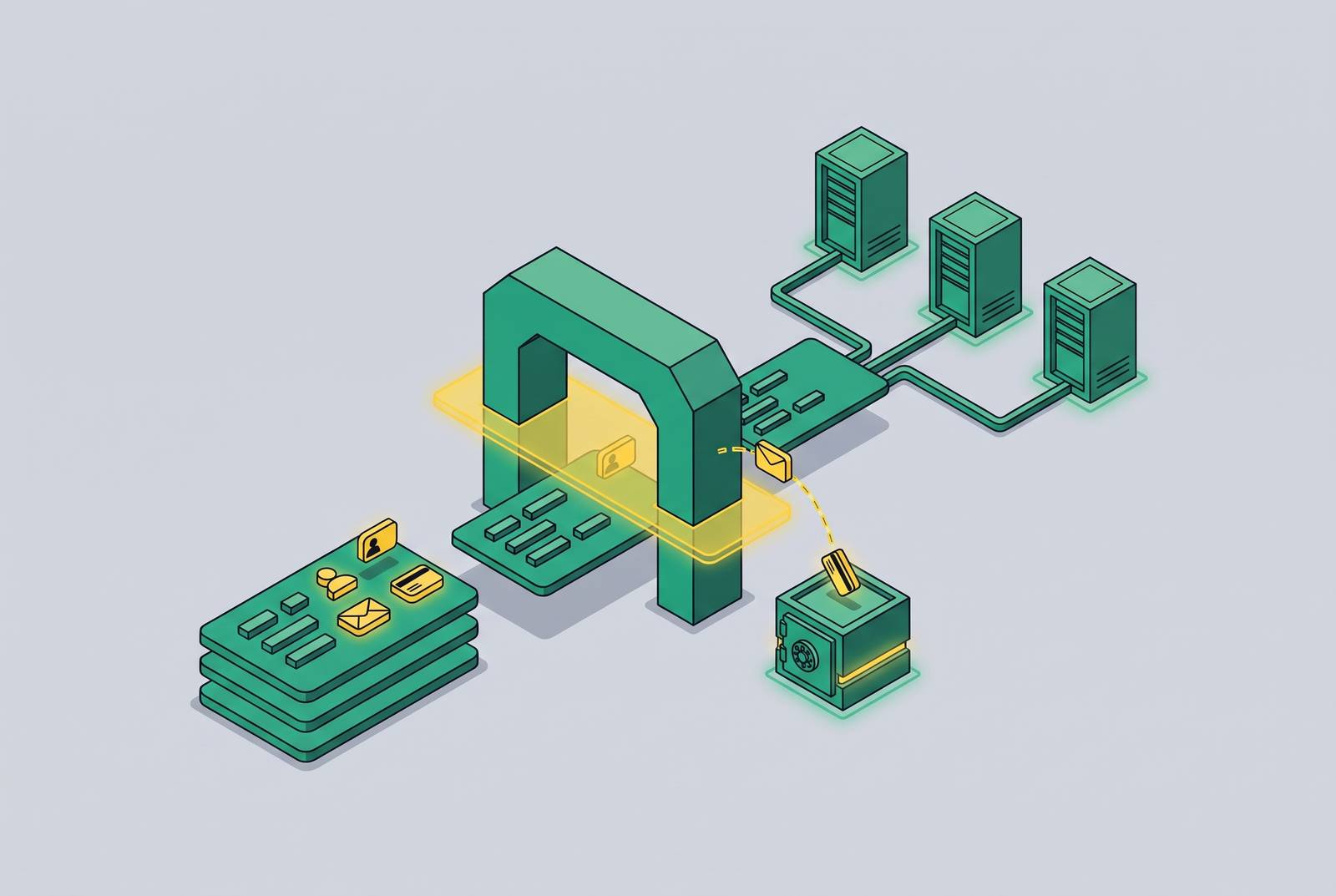
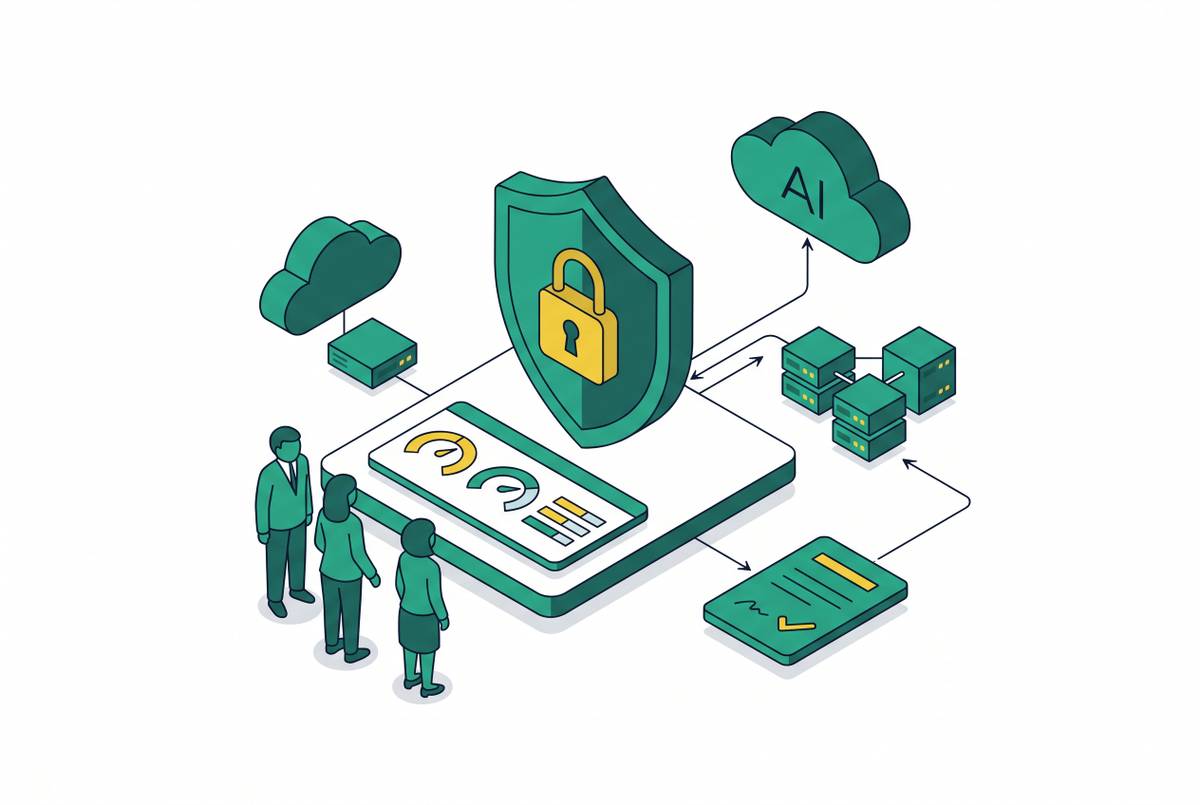
A gateway enforces PII stripping by inspecting the complete prompt before forwarding it to a model provider, then masking sensitive values or blocking the request. This creates one boundary that can be audited, so every application no longer has to sanitize every call. The protection depends on complete routing coverage, layered detection, and enforcement before transmission, with provider retention agreements addressing what happens afterward.
Why prompts are the perimeter — how PII reaches model providers in production
A production model call contains far more than the user’s latest sentence. Instructions, conversation history, retrieved documents, database records, tool results, and metadata become one payload before transmission. Each component can introduce sensitive data independently. A retrieval step can attach employee records, a tool can return an account number or token, and a user can paste a card number. The exposure surface is therefore the entire assembled context.
The OWASP Top 10 for LLM Applications names Sensitive Information Disclosure as LLM02:2025, covering personal, financial, health, credential, legal, and confidential business data. Once that data is sent, the organization no longer has direct control over it. Sending PHI to a provider without a Business Associate Agreement violates HIPAA and is presumed to be a reportable breach unless a risk assessment establishes a low probability of compromise. Personal data sent to a model provider is also processing under GDPR where its territorial scope applies, including relevant processing involving people in the EU.
Why scattering redaction across application code doesn’t hold
Application-level sanitization depends on uniform execution across a changing system. A new microservice, SDK, or provider integration can introduce a call path without the existing redaction step. Multi-model agent workflows add more of those paths because one task may make several calls to different providers. Every integration needs its own copy of the control. Without a central enforcement record, an omitted check can also be difficult to distinguish from a request that contained no sensitive data.
This is a structural weakness. Application code is closer to the data and can understand workload-specific context, which is the strongest argument for keeping detection there. But context and coverage solve different problems. Gateway policies can configure detection and scope by workload, while distributed sanitization still depends on every application invoking the right logic. A well-tuned detector in one service cannot protect a call that bypasses it in another.
How do you prevent sensitive customer data from reaching a model provider?
A gateway becomes the enforcement chokepoint because it already sits between applications and providers for routing, authentication, and rate-limiting. Where every model call uses that path, adding inspection covers upstream callers without separate redaction integrations in each application. Its position is the decisive architectural property. The API7 PII redaction guide describes a consistent policy applied after caller authentication and before routing, independent of the caller’s SDK. Each team, API key, model, or provider can have its own rules.
The gateway can inspect both requests and responses, but those checks offer different protection. Input inspection can stop sensitive data before it is sent. Output inspection can catch information a model generates or repeats, including data disclosed from an overbroad result, but it cannot reverse an earlier disclosure to the provider. Response filtering is therefore a secondary safeguard alongside inspection of the assembled prompt.
Detection methods — what runs inside the gateway to find PII
Structured identifiers, free-text personal information, and credentials each need their own detection methods. Regex patterns are fast, in-process checks for fixed-format values such as email addresses, Social Security numbers, card numbers, and IP addresses. They do not reliably identify names or locations. NLP entity recognition finds those mentions in context, including personal information in ordinary prose. Secret scanners cover the distinct credential category, including API keys, access tokens, JWTs, and private keys that ordinary PII patterns and entity recognition may miss.
A production policy needs layered detection using at least two engine types, with coverage determined by the data the workload can receive. The API7 guide recommends checks beyond matching digit sequences to cut false positives in structured-number detection, including checksum validation where it applies.
Detection also runs in the request’s hot path. Regex and deterministic validation add minimal overhead, while NLP calls add more and remote redaction calls add substantially more. The choice therefore affects every model request. Determinism also supports compliance testing because repeatable checks can be tested and defended in a review. A check that changes its answer across runs weakens both enforcement and the evidence supporting it.
Redaction actions — mask, block, or monitor, and when each applies
A detector’s finding must lead to an explicit action. Masking replaces the value and sends the sanitized text on, blocking rejects the request, and monitoring records the match but lets the original value through. Typed placeholders such as [PERSON_1] and [EMAIL] preserve the structure of a conversation without exposing the matched value. This allows a model to reason about relationships or sequence without receiving the underlying identifier. The appropriate action depends on both the data class and the task.
Reversible tokenization serves a different purpose from irreversible masking. It replaces PII with a token while retaining a mapping in a secure vault, allowing re-identification on the response path. GDPR Article 4(5) treats this as pseudonymization, so the data is still personal data covered by the regulation. Irreversible masking can support anonymization, but replacing selected identifiers is not by itself proof that the remaining context is anonymous. Compliance treatment depends on what can still identify the person.
Blocking applies when substitution would make the task unsafe or misleading. A payment workflow that needs an exact account value should use a non-LLM path rather than act on a placeholder, while credentials that must never reach a model should cause the request to be rejected. Monitor mode offers no equivalent protection at all. The API7 guide explicitly states that it leaves the original value available to the next component. It is a tuning and measurement tool, so a policy left in monitor mode cannot be described as enforcing privacy.
The audit trail — how the gateway produces evidence without storing content
The audit log must prove that enforcement ran without becoming another repository of sensitive prompts. Its record includes a session identifier, timestamp, requesting service or agent identity, token count, latency, detector outcomes, actions taken, and anomaly flags. Prompt and response content stay out of that record. The enforcement metadata provides evidence of the control’s operation, while the absence of content avoids retaining what the control was intended to remove.
Each redaction event should also have a trace event. The Arthur AI guardrail guide describes guardrail interventions as telemetry, traced like other spans in an agent workflow. Detection rates can then be monitored over time. A spike in successful redactions is a signal to investigate. This makes the audit trail useful to operational security as well as governance reviewers.
A proxy that sends full HTTP request and response bodies to an APM platform gives that content another place to be stored. Debugging can therefore weaken the privacy control itself. Even when the gateway never persists content, an observability pipeline that records raw payloads defeats the intended zero-retention posture. The logging review must include both that pipeline and the gateway’s audit configuration.
Zero data retention as the contractual complement to technical redaction
Redaction and Zero Data Retention address different stages of exposure. Gateway enforcement limits what enters the provider’s systems, while ZDR governs whether the provider persists what it receives. Neither replaces the other. A promise about retention still allows the provider to process sensitive information sent in a request, and successful redaction leaves the provider’s retention obligations to be set. Their combination addresses both transmission and persistence.
ZDR must be explicitly contracted beyond default provider terms. The agreement belongs in a Master Service Agreement or Data Processing Addendum, with audit rights included. PHI introduces a separate contractual requirement under HIPAA. A provider processing PHI requires a BAA, so ZDR without a BAA does not satisfy that requirement. Conversely, a BAA without ZDR may still leave PHI in provider logs.
These distinctions constrain any claim of a HIPAA-compliant AI gateway. Redaction capability, provider retention terms, and the relevant BAAs answer different questions about the data path. The contractual boundary must match the providers that actually process PHI, while technical enforcement limits the sensitive values transmitted to them.
How a managed gateway enforces this policy without a team maintaining proxy infrastructure
A chokepoint is reliable only while traffic passes through it. A self-hosted proxy with too few resources, a deployment that varies across the system, or a bypass during an incident can bring back the gaps in coverage that central enforcement was meant to close. Operations are therefore part of the security design. The build-versus-managed choice depends on both who controls the deployment boundary and whether the team can keep enforcement running at all times.
LiteLLM and other self-hosted, open-source gateways give teams control over the data path and deployment boundary. That can be important for air-gapped or strict in-VPC requirements. The team must operate, scale, and maintain the proxy. A fully managed gateway removes that infrastructure responsibility and can combine redaction policy, audit logging, fallback routing, spend tracking, and access controls in one service.
Concentrate offers a fully managed gateway with PII and PHI redaction, zero data retention, audit logs, RBAC, SSO, and a HIPAA-compliant gateway with a BAA available. Its pricing has no markup, platform fee, card fee, or BYOK fee, so teams pay only for tokens. No proxy deployment or maintenance is required. For healthcare startups and other teams handling sensitive data, access to a BAA without an enterprise procurement process means that company size no longer dictates how they build for compliance. Availability of these controls still needs to be considered with the workload’s deployment and provider requirements.
Self-hosting gives teams the direct control they may need over infrastructure, while managed operation takes on the work of keeping that infrastructure in the path. SSO, audit logs, and BAA availability should not depend on whether a small team can enter an enterprise contract, because delayed access leaves an architectural gap.
What a complete gateway PII policy looks like end to end
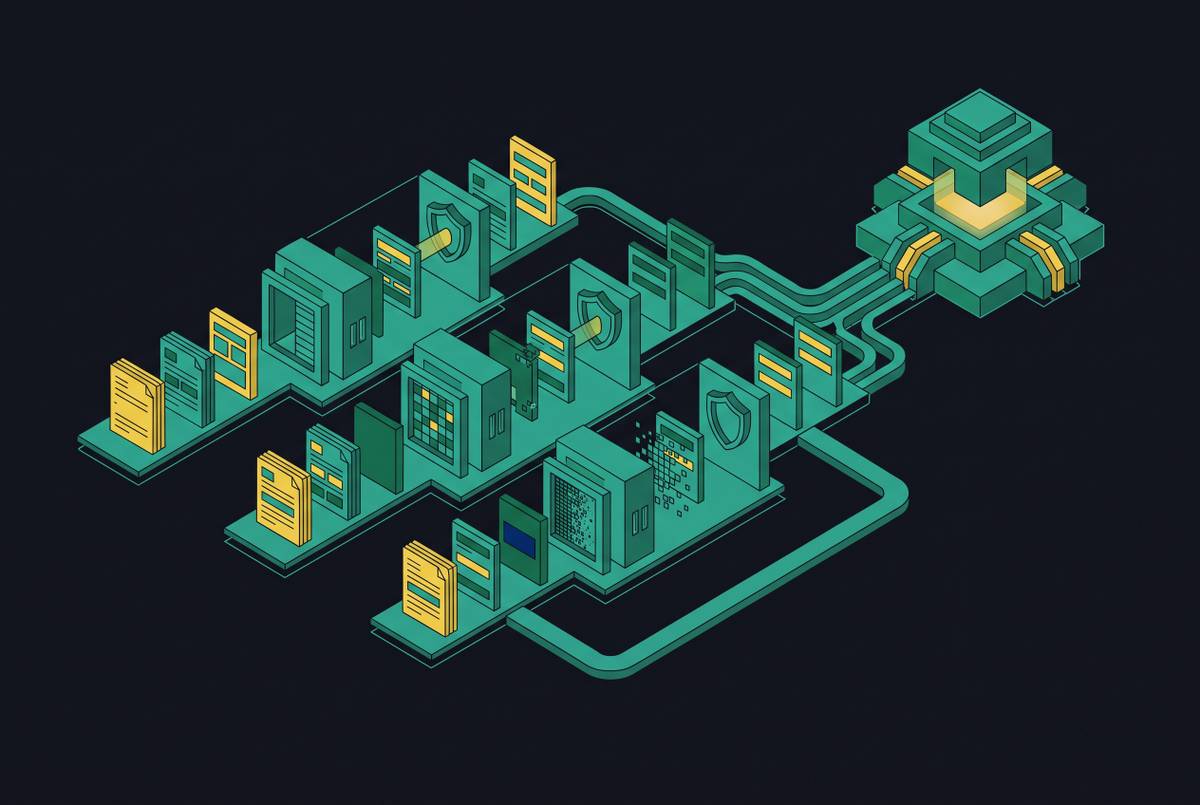
Classify data for each workload first. A complete policy identifies what values may arrive, which are necessary for the task, and which must never reach a provider. Detection follows those classifications. Regex covers structured identifiers, NLP entity recognition covers names and free-text PII, and secret scanning covers credentials. Actions then reflect the task, using typed masking where context is sufficient and blocking where a value is prohibited or substitution would be unsafe.
Audit metadata for each request records detector outcomes and actions without keeping prompt content, while observability pipelines are checked for raw-body logging. Monitor mode remains separate from actual protection. ZDR is explicitly contracted with each provider in scope, and the relevant BAA is in place wherever PHI processing requires it. These requirements apply to fallback routes as well as the primary integration.
Every application must pass through the gateway, and its rules must cover every model and provider in use. Deployment and availability are part of that requirement.