Why Clinician-Facing AI Tools Need Infrastructure-Level PHI Controls Not Application-Level Promises
Safeguarding patient data in AI requires infrastructure controls, not vendor promises.
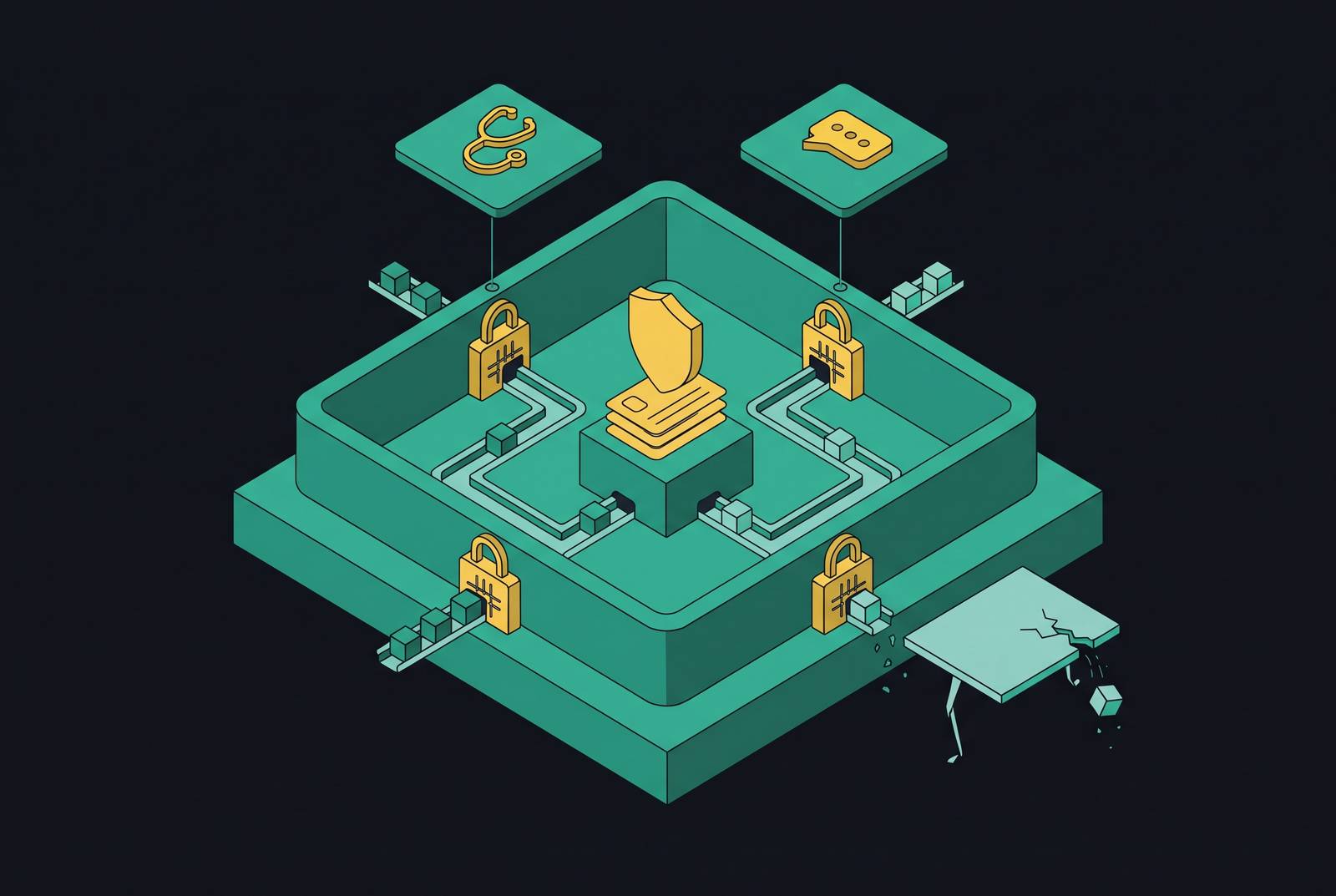
Clinician-facing AI needs infrastructure-level PHI controls because promises made by an application cannot control every route patient data takes. A HIPAA-compliant AI gateway applies sensitive-data detection and redaction before requests reach OpenAI or another model provider, restricts routing to approved destinations, and records who accessed what. Its value is consistent enforcement across applications.
Why PHI safety in clinician-facing AI is an architectural problem, not a feature problem
Treating PHI safety as an application property is a category error. A vendor checklist says what a tool can do, but it does not show that those controls apply to every request. Clinical note summarizers, prior authorization assistants, and diagnostic support tools can handle PHI in prompts, retrieval-augmented context, and outputs that inform patient-level decisions. The relevant boundary therefore extends beyond the application interface. It includes every system that receives patient data as the request moves through the deployment.
HIPAA does not exempt AI from the Privacy Rule, Security Rule, or Breach Notification Rule. A “HIPAA-ready” label may indicate that a vendor offers a BAA and certain controls, but using that product does not automatically make a deployment compliant. HHS does not recognize private certifications of Security Rule compliance. The organization must demonstrate its safeguards, risk analysis, and BAA chain. When enforcement depends on each application implementing those safeguards correctly, a missed validation step or unreviewed endpoint can create a disclosure path without changing anything visible to the clinician.
What HIPAA's technical safeguards actually require from an AI deployment
The HIPAA Security Rule places obligations on the deployment. Access control, authentication, audit controls, and transmission security concern how systems handle ePHI. The same open-weight model can sit within a compliant or noncompliant deployment. Its surrounding controls determine who can invoke it, where patient data travels, and whether activity can be reconstructed. Infrastructure-level enforcement addresses those obligations at the point through which requests pass, rather than relying on each application's implementation.
HIPAA requires organizations to record and examine activity in systems that contain or use ePHI. For AI deployments, useful audit records include timestamps, user or system identities, actions performed, and the data or systems accessed. They also identify the initiating user or agent and the model that processed the request. Structured records make that reconstruction possible without assembling disconnected application logs after an incident. Logging is an operating control.
The December 2024 proposed Security Rule update would remove the distinction between “addressable” and “required” specifications. The proposal would make controls including encryption of ePHI at rest, MFA, vulnerability scanning, and asset inventories unambiguously required, closing the discretion teams have used to defer them. The proposal has yet to become a requirement. OCR Senior Advisor Nick Heesters said in April 2026 that enforcement was looking beyond whether organizations have a risk analysis to whether they carry out their risk management plans. That puts the focus on patching, monitoring, and keeping controls working.
How the BAA chain extends to every hop PHI crosses, including the model provider
Technical safeguards and contractual coverage meet at the disclosure boundary. A vendor that creates, receives, maintains, or transmits PHI on behalf of a covered entity is a Business Associate and requires a signed BAA before handling that data. HHS guidance on cloud computing applies this status even when the cloud provider cannot decrypt the ePHI. A hosted gateway that handles PHI therefore needs its own coverage.
The four deployment architectures illustrate why this is a topology question. Hyperscaler model endpoints (AWS Bedrock, Azure OpenAI, Google Vertex AI) require a BAA with the hyperscaler and adherence to the specific requirements of eligible configurations. Direct vendor API with BAA (OpenAI zero-retention, Anthropic HIPAA-ready tier) places the model vendor directly in the PHI path and requires an agreement with that vendor. Both depend on how the service is set up. Eligibility alone does not establish compliant use.
A self-hosted open-weight model on rented GPU cloud takes the model vendor out of the data path, but the infrastructure provider still needs a BAA. Fully on-premises GPUs the organization owns involve no external party receiving PHI and require no external BAA for that model deployment, but impose the highest operational burden. Request logs, trace exports, response caches, and fallback providers each need appropriate controls.
Why application-level controls fail silently when any of these conditions change
Application-level controls can break as software keeps changing and compliance obligations stay in place. Each application must preserve the same invariant through every release, namely that PHI cannot reach an unauthorized destination. A new endpoint can bypass existing scrubbing logic. A prompt template can introduce a patient field that the detector does not recognize, while a feature can ship before redaction validation is complete. These are ordinary development changes, but they alter the disclosure boundary.
A personal API key used for testing can bypass the governed credential, and a downtime workaround can send requests to an uncovered provider. Either change can happen without showing up in the application's normal user interface. Training and code review reduce mistakes, but they do not observe every request across every application. An intermediary that only forwards traffic leaves each application it serves to watch its own requests.
Johns Hopkins Bayview Medical Center illustrates the related risk outside approved applications. A workforce member uploaded a spreadsheet containing patient data to an unapproved public AI tool while conducting an internal review. The incident and its discovery occurred on September 21, 2026. Such a disclosure requires assessment under the Breach Notification Rule, including the required four-factor risk assessment rather than an assumption that every incident has the same notification outcome. The case shows why controls inside an approved application cannot protect PHI sent through a different path.
What infrastructure-level enforcement actually looks like: the LLM gateway as control plane
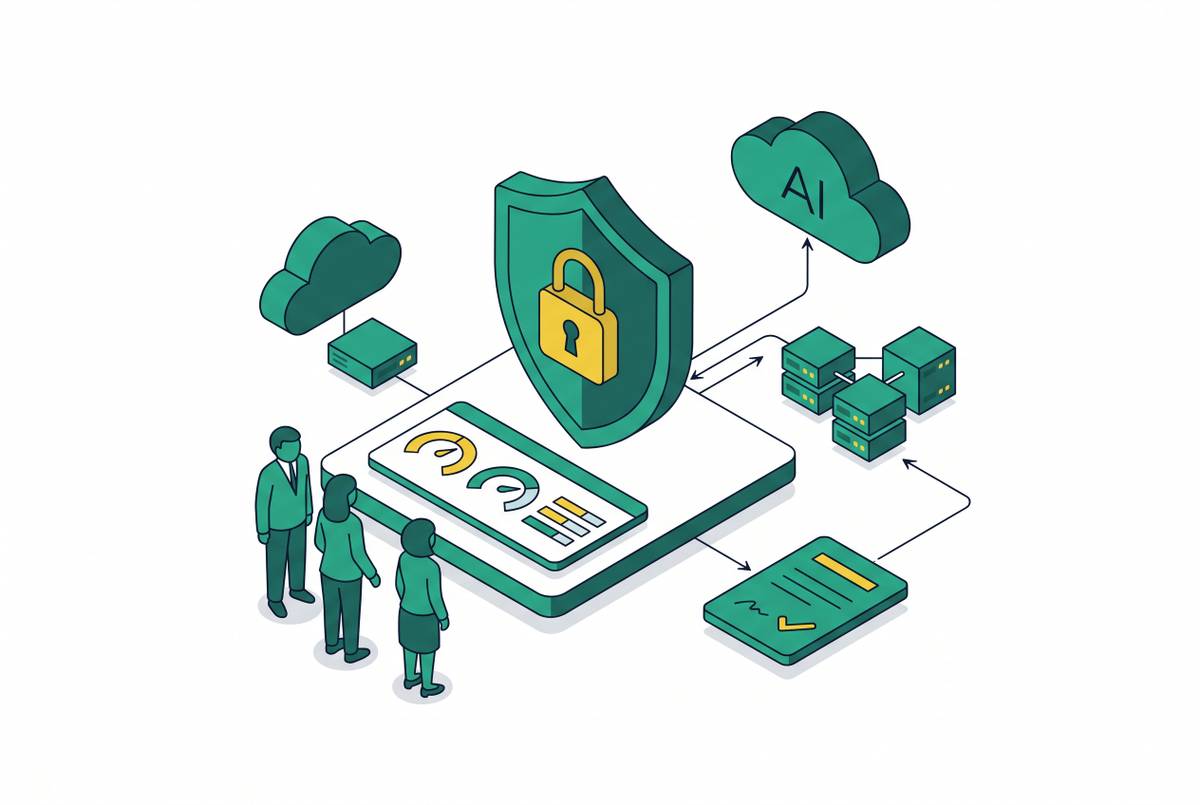
An LLM gateway functions as a control plane when it actively enforces policy. It authenticates callers, detects and redacts sensitive inputs before model access, restricts PHI routing to BAA-covered or self-hosted destinations, and maintains an audit trail. This is the architectural answer to preventing sensitive data from reaching unauthorized model APIs. Enforcement occurs before the request leaves the controlled boundary. Its scope depends on the governed path actually covering the applications and credentials that can send requests.
Four properties distinguish that control plane from a pass-through. Deployment isolation places it in-VPC, on-prem, or air-gapped, keeping the gateway vendor outside the PHI path when the deployment supports that boundary. Complete logging records request and response activity together with tamper-evident administrative changes, distinguishing model use from changes to the controls. Identity-aware access connects SSO, role-based permissions, and scoped credentials to accountable users or applications. Runtime guardrails apply PHI detection and redaction before inference, with configurable redaction modes and per-key content logging controls.
Routing configuration is itself a compliance artifact. It defines which models may receive PHI, for which use cases, and under what conditions, so it must be governed, versioned, and auditable. Retention policy needs equally explicit treatment. Zero-retention arrangements address deletion of prompts, files, and outputs after inference, while audit-log retention must be defined separately. The BAA must also document that third-party providers do not receive PHI for training or model improvement.
Stanford Medicine's VISTA Architect tumor board system provides a concrete institutional example. Its sequential-pipeline calls use Stanford SecureGPT, an Azure OpenAI proxy inside Stanford's institutional perimeter, while its agentic-pipeline calls use a Stanford-managed Google Cloud Vertex AI environment. Both endpoints are described as PHI-compliant. The Vertex AI environment operates under the same data-use agreement, with institutional access controls governing the infrastructure.
How fallback routing and provider outages become compliance events without infrastructure enforcement
When a provider has an outage, choosing the next route means deciding where to disclose data. During a clinical workflow, pressure to get service working again can push an application to use whichever endpoint still works. Primary-provider coverage does not extend automatically to that substitute. If the fallback receives PHI without the necessary BAA, the original route's safeguards do not authorize the transfer. Reliability policy and compliance policy therefore converge at the routing layer.
A production fallback chain may move from the primary provider to a cheaper model on that provider, then to a different provider, and finally to a local self-hosted model. Every external hop that handles PHI must have authorization and BAA coverage before it receives the data. The outage is too late to establish those conditions. Gateway-enforced, per-key provider allowlists make a newly added fallback subject to the caller's existing permissions. For high-risk healthcare workflows, the recommended default when no covered fallback remains is to fail closed, disabling the AI feature.
Hybrid routing applies the same principle before an outage. PHI-heavy tasks can run on a locally hosted model, while tasks with data that is already de-identified may use cloud endpoints. The gateway must enforce that distinction rather than accept an application's declaration of intent. Each routing decision also needs an attributable record. Model, provider, credential, and token data then let compliance and finance examine the same event instead of reconciling separate accounts of what happened.
Spend visibility and access control as HIPAA controls, not just operational conveniences
Spend data becomes useful to compliance when it identifies access. A token total on its own cannot show which clinical team used which model endpoint or whether the system detected sensitive data. An attributable record connects that usage to a team, project, credential, model, and provider. The activity data underlying cost supports access review and minimum necessary analysis when joined to the relevant audit context.
HIPAA requires recording and examination of activity involving ePHI, while SOC 2 and ISO 27001 also address security-relevant logging. Those obligations do not mean that every standard calls for non-repudiable records of every system interaction. For AI governance, tamper-evident logs can document the initiating identity, credential, model, token usage, and PHI detection result. Administrative records establish who changed the rules.
Infrastructure-level RBAC gives those records an enforceable counterpart. A unique, scoped virtual key defines the providers, models, and tools available to each caller, while SSO ties access to corporate directory identities. A read-only Viewer role can let finance or clinical leadership see spend without giving them engineering access. A custom Auditor role can expose logs, guardrail configurations, and user records without granting model access. As the number of clinical teams and non-human identities grows, one enforcement point supports joiner-mover-leaver access hygiene without teams having to reconcile access by hand in each application.
What a governed infrastructure layer does to shadow AI and the compliance posture it creates
A governed path can reduce shadow AI by removing reasons to use an unauthorized one. When clinicians can reach the models they need through institutional SSO, a consumer tool offers less practical advantage. The gateway cannot govern traffic that never reaches it, so its presence alone does not prove that shadow AI has disappeared. The Johns Hopkins incident makes that boundary especially important, because the disclosure occurred through a public tool outside the approved workflow.
Within the governed path, the organization gains evidence that policies executed. Audit records can identify the authenticated caller, timestamp, model endpoint, token count, and PHI detection result for each request. Versioned routing configuration can show which destinations were permitted and whether fallback routes stayed within BAA-covered boundaries. Redaction records make enforcement reviewable at the chokepoint. RBAC records can show that access followed least privilege and was tied to corporate identities.
That evidence gives the organization a concrete account to present to OCR. It can connect its risk management plan to the controls that ran, the destinations those controls permitted, and the identities responsible for access and administrative changes. Gaps become identifiable events. The defensible audit narrative is that the organization can reconstruct how patient data was governed on every covered request.