LLM Gateway Integration with Existing API Infrastructure
Positioning the gateway upstream of your API calls avoids scattered provider dependencies later.
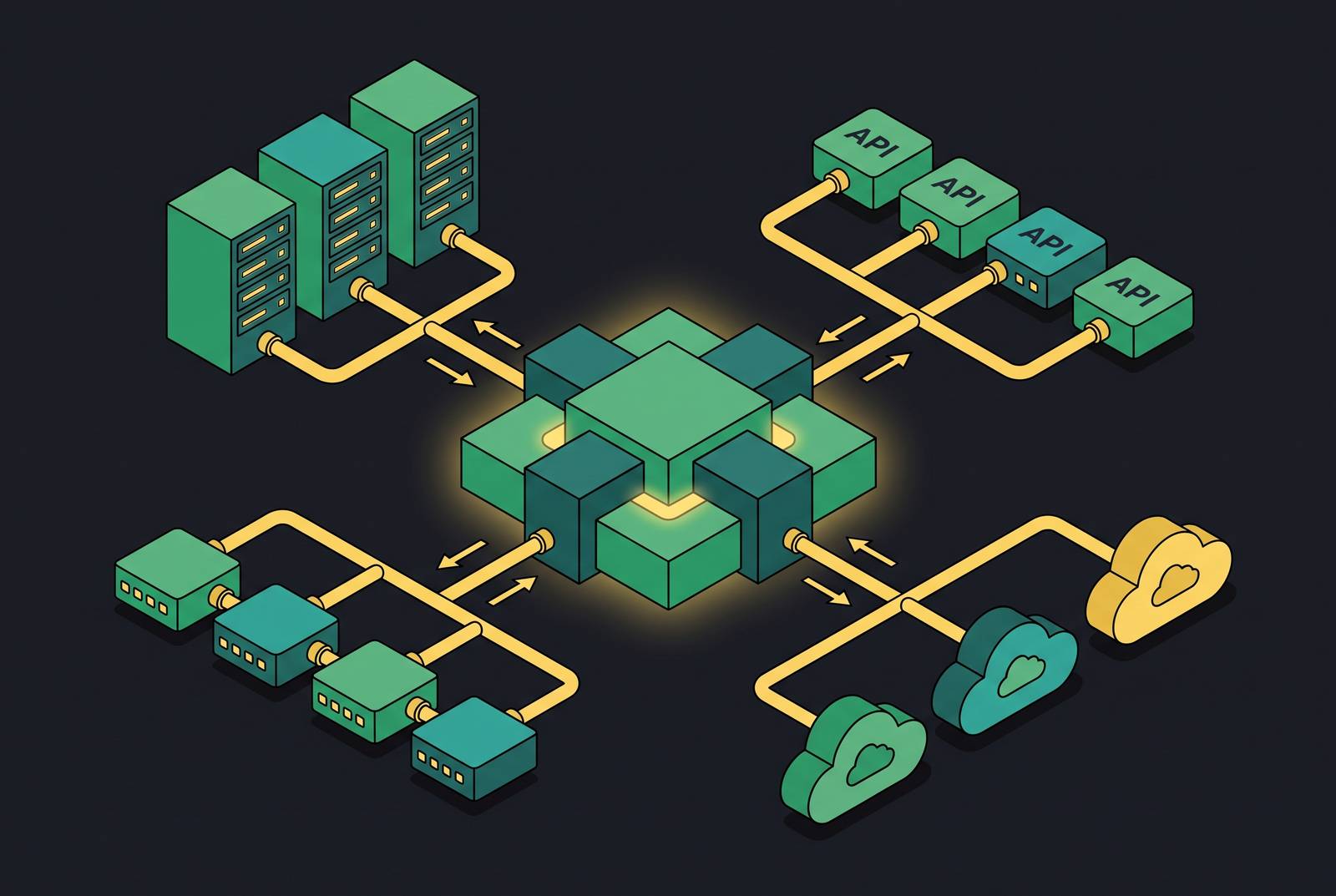
Integrating an LLM gateway into an existing stack is mostly an architecture problem, not a vendor selection problem. Where the gateway sits relative to your request pipeline, your auth layer, and your logging setup decides how much complexity you actually absorb versus offload.
The market driving this decision is fragmented on purpose. OpenAI, Anthropic, Google, Groq, Cohere, Perplexity, AWS Bedrock, and Azure each expose different request formats, different auth schemes, different rate-limit rules, and different error codes, a sprawl that model routers like Concentrate address by giving teams one API endpoint into all of them. This isn't a phase teams will grow out of. More than 70% of organizations now run three or more models in production. Multi-model complexity is the baseline, not the exception.
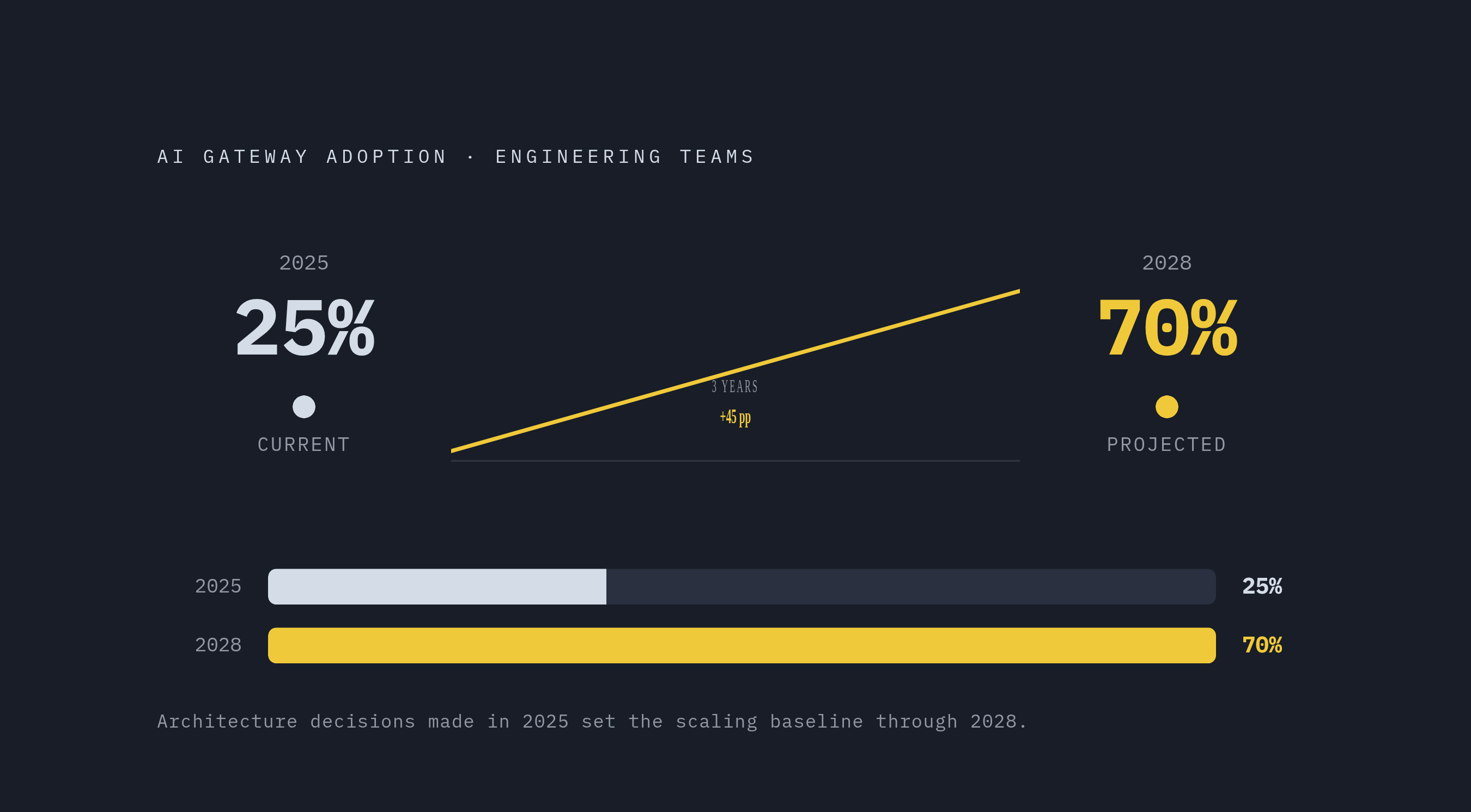
Gartner's working definition of an AI gateway describes it as an intermediary between applications and AI services, one that centralizes security, governance, and observability while simplifying access. That's a fair description, but it undersells the stakes. Enterprise LLM API spend went from $3.5 billion in late 2024 to $8.4 billion by mid-2025. At that growth curve, a sloppy integration decision doesn't stay small. It compounds into real operational debt within a few quarters. Industry analysts project that by 2028, 70% of engineering teams building multi-model applications will run an AI gateway, up from around 25% in 2025. Teams making this call now are setting the architecture they'll be stuck scaling later.
Where the gateway sits in the request pipeline and why the position matters
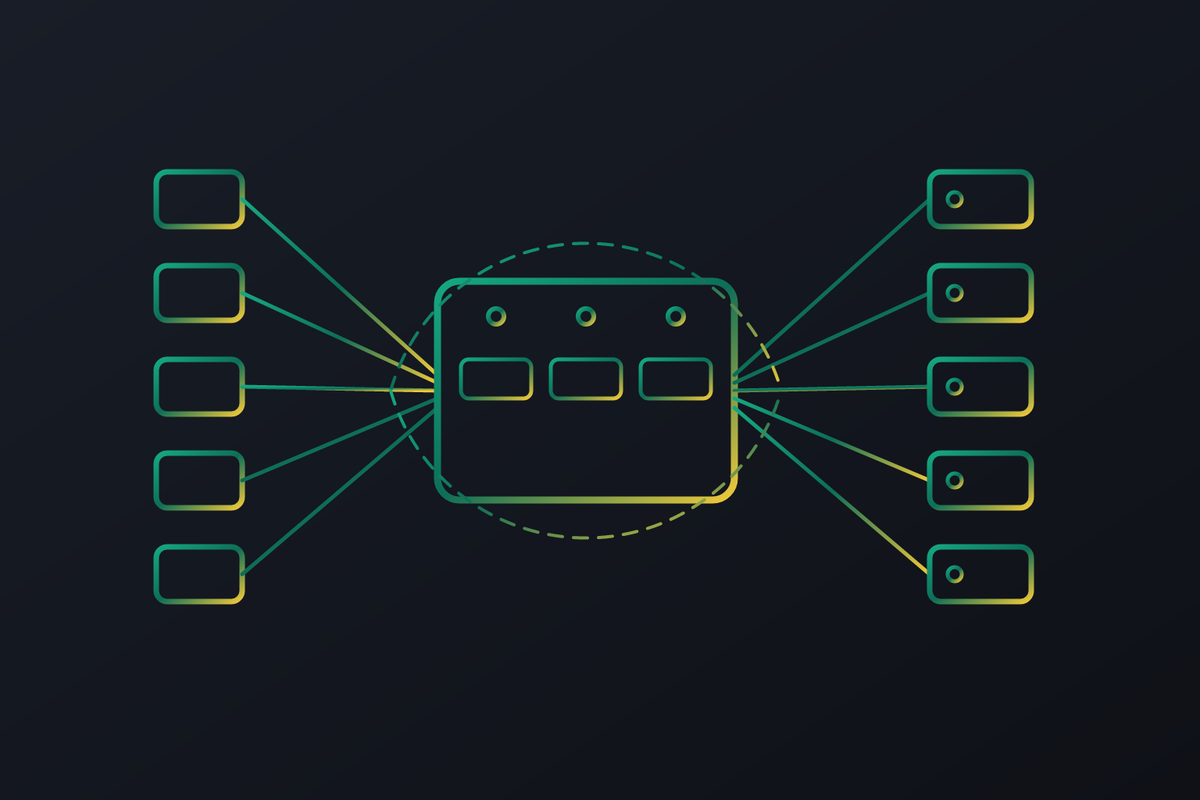
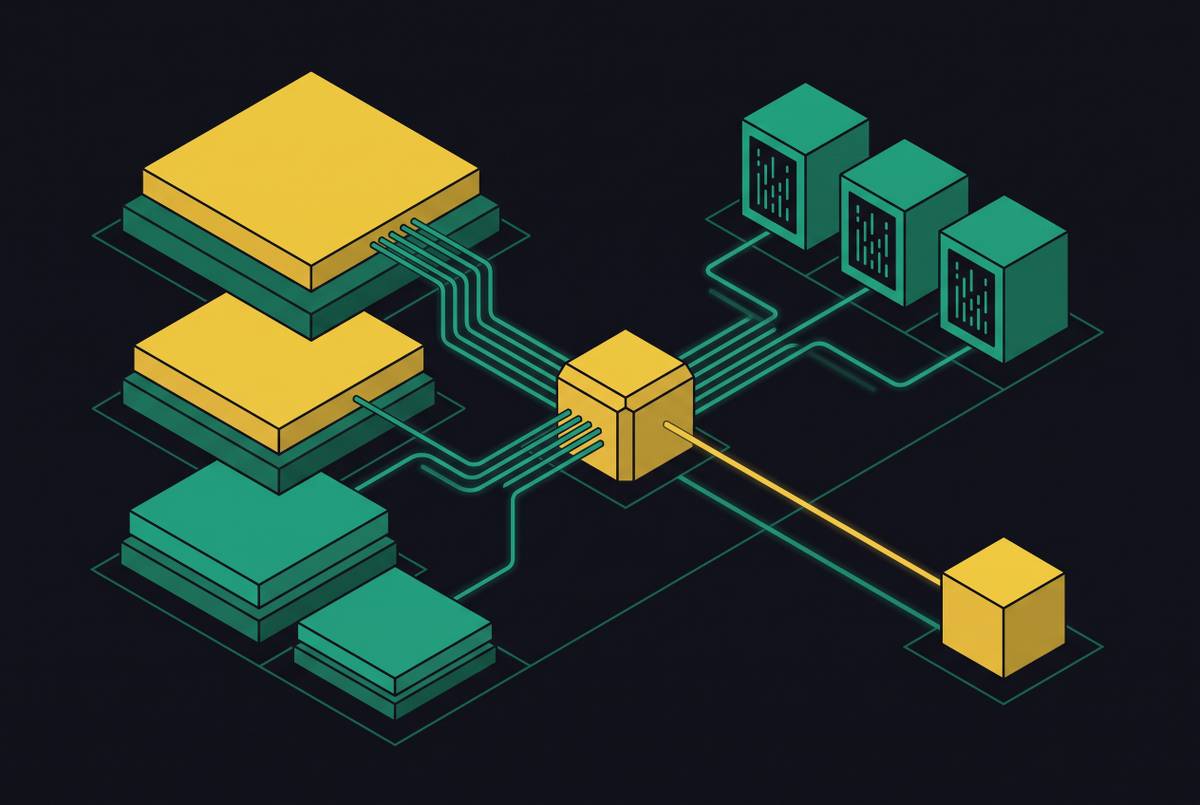
Structurally, an AI gateway works as a reverse proxy for model APIs. Applications send requests to one stable endpoint. The gateway handles provider selection, authentication, format translation, and policy checks behind that endpoint, invisibly to the calling code.
The topology is simple to sketch: application layer talks to the gateway through a single API, and the gateway talks to whichever provider tier sits behind it, OpenAI, Anthropic, Google, AWS Bedrock, and so on. The real proof this is working shows up when a team swaps GPT-4o for Claude and doesn't touch a single line of application code.
Because the gateway sits upstream of every provider call, it's the natural place to enforce routing rules, rate limits, budget caps, key management, and safety checks. But that only holds if the gateway gets placed there on purpose, not bolted on after the fact.
Skip that step and teams end up with:
- Provider dependencies hard-coded across a dozen services
- API keys managed separately, service by service, with no central view
- Retry and fallback logic duplicated inconsistently across the codebase
- No single point where policy actually gets enforced
Agentic workflows make this worse in 2025 and 2026. A single user request might chain a reasoning model, a fast classifier, a retrieval tool, and a second model doing output verification. The gateway now has to route and govern the whole chain, not just one call in isolation. Before integration starts, someone has to answer a blunt question: which jobs belong to the gateway, and which stay with the application layer? Get that wrong and half the gateway's capabilities end up decorative instead of load-bearing.
How the gateway integrates with existing auth layers and API key management
Before a gateway goes in, each team usually holds its own provider keys. Rotating one means touching every service that uses it, and there's no central record of which key hit which provider, or when.
After the gateway, credentials live in one place. Applications authenticate to the gateway with virtual keys or scoped tokens, and raw provider credentials never touch application code at all.
Virtual keys work like this: an application gets a key scoped to a team, a project, or a specific workflow. The gateway maps that virtual key to a real provider credential at request time. Rotating or revoking a provider credential happens once, centrally, without anyone editing application code. The scope on the virtual key also decides which models, which providers, and which budget the application can actually touch.
Identity integration matters here too. The gateway should plug into the organization's existing identity provider through SSO, using the same login infrastructure everyone already relies on, not a second, parallel credential system nobody remembers exists.
Zero-trust practices tighten this further:
- Short-lived tokens, MFA, and device posture checks shrink the blast radius if a key leaks
- Role-based access at the org, project, and key level controls who can view, edit, or rotate anything
- Audit logs on access events give security teams a forensic baseline: who touched what, and when
The real friction point shows up when teams already run API management tooling for non-AI traffic. The question becomes whether the LLM gateway sits alongside that existing stack or takes over auth duties for AI traffic specifically. Teams with mature API platforms already in place often get a real integration advantage if the gateway inherits existing traffic policies rather than duplicating them from zero.
Routing logic and how it connects to model selection across providers
Routing decides which model handles a given request, and its quality depends on what it's optimizing for. Resilience, cost, quality: most production systems need all three at once, which is a harder problem than picking "the best model."
Three routing patterns cover most of what's in production:
- Pre-request rules: cheapest to run. Static conditions, like task type, caller identity, or time of day, send requests to a designated model before inference even starts.
- At-inference cascades: the most accurate approach. The router checks query complexity or confidence signals and escalates to a stronger model only when the situation calls for it.
- Post-response retry: the safety net. If a provider errors out or a quality check falls below threshold, the gateway retries against a fallback provider.
Research backs the cost-quality tradeoff directly. RouteLLM, from Berkeley LMSys and Anyscale (ICLR 2025), showed a matrix-factorization router hitting the vast majority of GPT-4's performance while only calling GPT-4 on a minority of queries. The underlying point: most queries never needed the strongest model in the first place.
One caveat matters more than the headline number. Benchmarks like MT Bench, MMLU, and GSM8K measure whether a router picks the benchmark-optimal model, not whether that choice matches what real users actually want under mixed conditions of quality, cost, and latency. Any routing change needs a measured quality gate in production, not just a benchmark win on paper.
The 2025-2026 model landscape has made static routing tables obsolete on their own. No single model wins across every dimension: the top tier sits closely matched overall, with clear specialists by task, strong coding models, strong reasoning models on specific benchmarks. A growing open-weight and value segment expands the field of routing candidates well past the frontier labs. Benchmarking efforts pooling over a dozen flagship models from multiple providers, with real cost data attached, reflect just how wide that candidate pool has gotten.
Automatic routing that hides its own decisions is a governance failure, not a convenience. If the gateway swaps models without surfacing why, nobody can trace a quality regression or a cost spike back to its cause. Routing logic needs to be visible, auditable, and tied to criteria someone can actually point to.
Fallback chains deserve to be treated as reliability infrastructure, not an edge case. Provider outages happen. The gateway's fallback configuration is the line between a degraded response and a feature that's just down.
How gateway placement determines what your observability stack actually sees
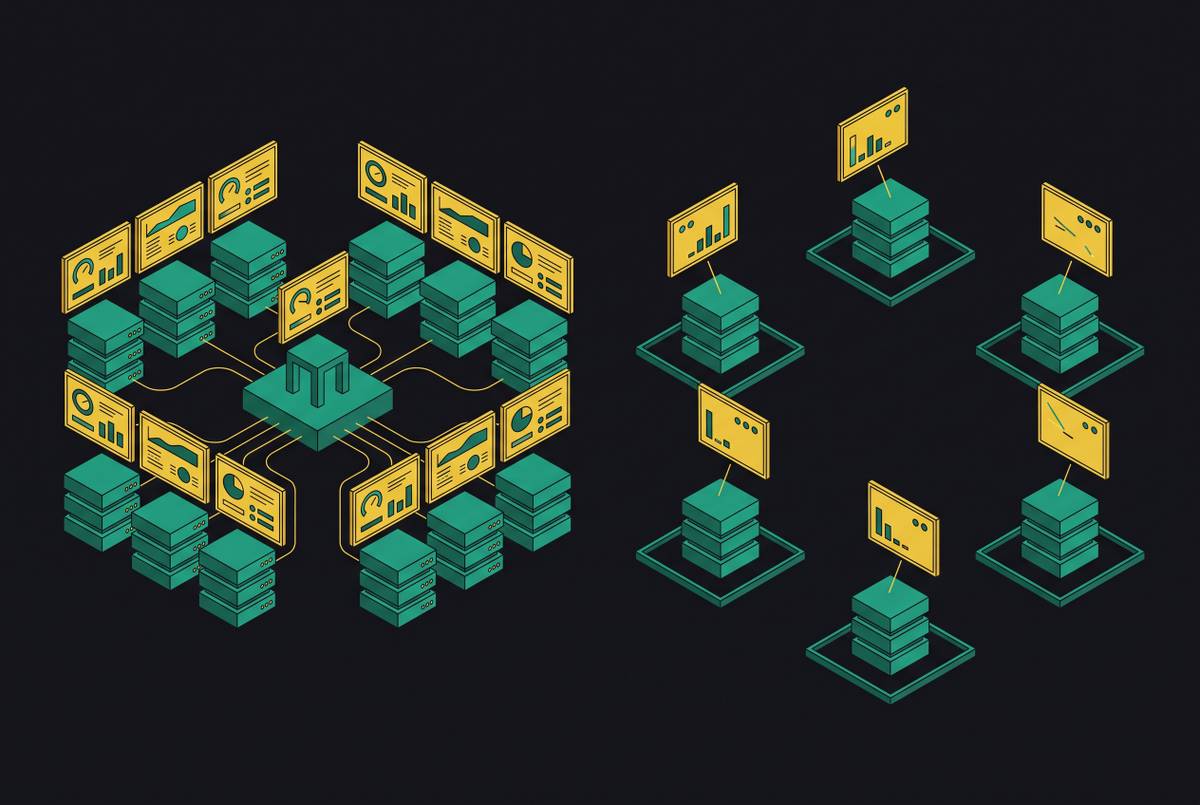
Most teams treat observability as something added after the gateway is live, a separate monitoring layer bolted on top. That creates gaps: request data has to get forwarded elsewhere, traces fragment across tools, and debugging turns into a scavenger hunt across three different dashboards.
The better setup builds observability into the gateway itself, so every request, the routing decision, the provider call, the cache lookup, the fallback attempt, lands in one unified trace without extra wiring.
Native gateway observability should cover a specific set of things:
- Request counts, latency spread, error rates, and token usage, tracked at both the provider and model level
- Trace context that follows one user request through routing decisions, provider calls, cache hits or misses, and any fallback chain
- Structured metadata on every request and response: provider, model, latency, token counts, status codes, the actual routing path taken
- Cache hit and miss ratios sitting in the same pipeline as provider performance, not off in a separate dashboard nobody checks
For agentic and retrieval-augmented pipelines, distributed tracing at the gateway is the difference between knowing which step degraded and guessing at it. A multi-step agent can trigger several model calls and tool invocations inside a single workflow, and the gateway is the only vantage point that sees the entire chain end to end.
Gateway-level metrics cover the infrastructure layer: latency, errors, cost, routing path. Quality observability is a separate, second layer, checking whether the model actually answered correctly and whether output is drifting over time, and it should pull from the same gateway logs rather than standing apart from them.
When a service skips the gateway, or bypasses it for some calls, that service goes dark. Shadow AI usage, unmonitored agents and workflows security teams didn't know existed, is as much a routing and observability gap as it is a policy failure.
Cost attribution and spend control as a function of gateway integration depth
Token spend doesn't behave like seat-based software licensing. It scales directly with usage, it can grow fast across teams without anyone noticing in real time, and it usually sits behind provider dashboards that finance teams can't easily read or reconcile against budget.
Per Ramp, AI token spend across its customer base grew 20.7 times since June 2025, and the median business saw month-to-month AI spend swings of roughly 58%. Sixty-one percent of businesses averaged swings of 40% or more. That's not noise. That's a budgeting process breaking down in real time.
Per SpendHound's 2026 AI Spend Report, 46% of finance and procurement leaders went over their AI budget in 2025, compared with 37% who overshot on traditional software. The overage rate for AI spend is structurally worse than ordinary SaaS, not just louder.
A few root causes show up again and again, and gateway integration addresses each one directly:
- Prompts nobody's watching, quietly driving up token consumption across services
- Multi-step agents racking up many model and tool calls per single user interaction
- Frontier models doing routine work that a cheaper model handles just fine
- No attribution at all, so nobody can point to which team or product is actually running up the bill
Gateway-layer budget controls fix this at the source. Budgets cascade hierarchically, customer, team, virtual key, provider, and when a limit hits, the gateway returns a structured error instead of letting spend run past the ceiling until an invoice shows up weeks later. Usage attribution breaks down by model, user, department, key, and token type in real time, not reconstructed after the fact from a provider's monthly statement. Per-key rate limits reject requests that exceed an allocation before the provider even charges for them.
None of this works halfway. Spend controls only function if every AI call actually routes through the gateway. A service that bypasses it also bypasses its budget enforcement entirely, which is why gateway adoption has to be comprehensive across the org, not something teams opt into selectively.
Semantic caching adds a further cost lever: the gateway can serve a cached response for a semantically similar query instead of hitting the provider again. The savings only show up as real, though, if cache hits flow through the same observability pipeline as everything else, rather than sitting in a separate report nobody cross-checks.
Where PII redaction and data governance fit into the gateway's request flow
The compliance pressure here isn't hypothetical anymore. OWASP moved Sensitive Information Disclosure from position 6 in its 2023 list up to LLM02 in its 2025 Top Ten, a direct reflection of how much more organizational data LLMs now touch, and how much wider that exposure surface has become.
Provider defaults make the risk concrete. OpenAI retains API data for 30 days by default for abuse monitoring. Anthropic cut its standard log retention from 30 days down to 7 days as of September 2025. Zero-data-retention exists as an option, but it requires a negotiated enterprise agreement for eligible API customers. It is not the default on pay-as-you-go plans, and plenty of teams assume otherwise.
The case for handling redaction at the gateway rather than in each application is straightforward. PII logic scattered across services drifts over time, gets skipped entirely in newer microservices nobody remembered to update, and leaves no single audit trail behind. PII logic enforced at the gateway applies one policy uniformly, everywhere, with a centralized record of what got redacted, at which stage, and when.
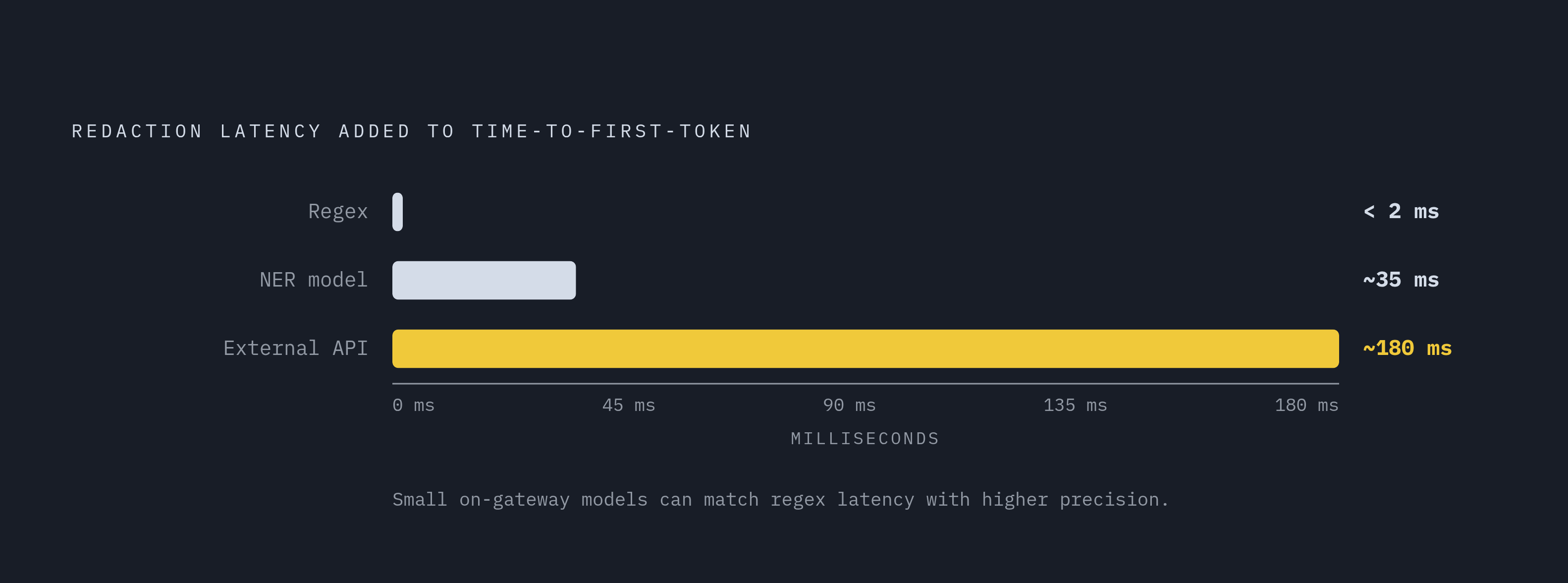
The latency tradeoffs are real, and they're measurable rather than theoretical. Regex-based redaction adds under 2 milliseconds. A named-entity-recognition model adds roughly 35 milliseconds. Calling an external PII API adds roughly 180 milliseconds to time-to-first-token. Small models running on the gateway itself can offer a latency profile competitive with regex-based approaches while preserving reasonable precision, and generally beat calling out to a remote redaction service on both speed and coverage.
The regulatory clock is also running. EU AI Act obligations for high-risk systems, covering risk management, data governance, record-keeping, transparency, and human oversight, start landing around August 2026. Cumulative GDPR fines have already passed €5.88 billion since 2018. Against that backdrop, the gateway's audit log becomes the evidentiary record regulators will actually ask for, not a nice-to-have feature buried in a settings menu.